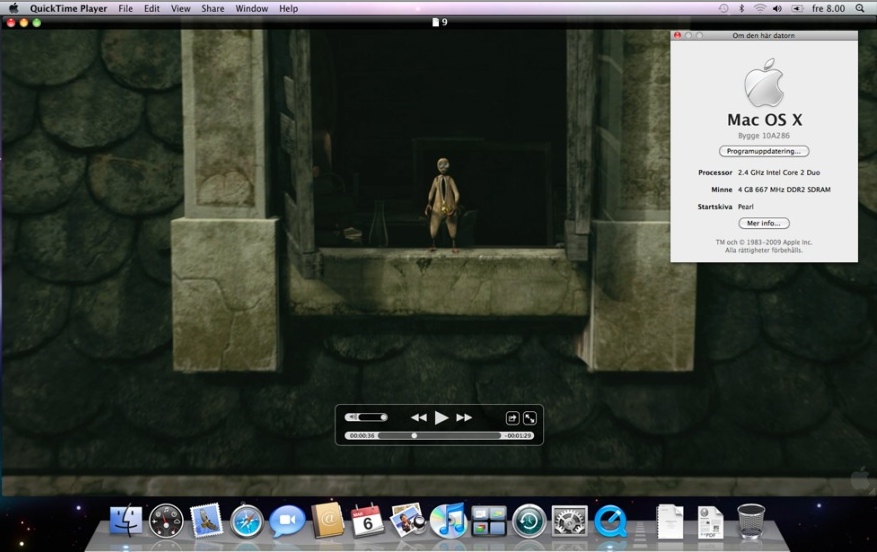
On the Marionette Theatre

After I wrote a short story for Internet's theatre performance, Acting, Siân Robinson Davies (who is one half of Internet) sent me a link to an essay called On the Marionette Theatre by Heinrich von Kleist.

You can find the full text in English here.


Oh Heinrich! That's what I think when I look at this picture. Oh Heinrich!

He was a North-German Romantic playwright and poet. He killed himself at the age of 34, after 10 years of published work. He first shot the woman he loved, Henriette Vogel, and then he turned the gun on himself as part of a suicide pact. Oh Henriette! Oh Heinrich!

As well as plays and poems, he wrote a few essays, including On the Marionette Theatre. Though, it isn't an essay in the traditional sense.


--


On the Marionette Theatre is a essay supposedly about dancers and marionettes. It takes the form of a dialogue between the narrator (who we assume to be Heinrich von Kleist) and a dancer by the name of Herr C. in a public gardens in the winter of 1801.

The narrator comments that he has seen Herr C. captivated by the puppet shows in the local market.

Herr C. says that the puppets are exceedingly graceful and then goes on to tell the narrator about his theory,

'that a marionette constructed by a craftsman according to [Herr C.'s] requirements could perform a dance that neither he nor any other outstanding dancer of his time [...] could equal.'

Through a strange and convoluted dialogue, the narrator and Herr C. swap stories in order for Herr C. to convince the narrator of his theory that his hypothetical puppet would be more graceful, and its movements less affected than a human dancer.

--


But the essay isn't really about puppets. Or, more like, it is about puppets and dancers, but as a synecdoche of all human behaviour.

And it's no coincidence that I use the word synecdoche, which is the title of a film by Charlie Kaufmann, because whilst reading the essay, I got the same feeling that I get when I watch a Charlie Kaufmann film. Which is also maybe the feeling I'm going for when I write stories (but, obviously, mostly fail to achieve). That feeling is of reading one story that tells many - perhaps infinitely many- stories.

It also is no coincidence that Charlie Kaufmann's film Being John Malkovich is about a puppeteer, or that Synecdoche, New York is about a theatre director, or that Adaptation is about a screenwriter.

That makes it all sound crassly post-modern. Like, durrrr life is a bit like a film right? But if you have seen the films you'll know that it's not a direct metaphor, and he doesn't constantly play it for dramatic irony. The feeling I get while I'm watching Kaufmann's films is the feeling I used to get at school in maths where, just for a moment, I could conceive not just of the answer of an algorithm, or trigonometric function, or quadratic equation or whatever, but of the abstract essence of it. An essence that existed beyond numbers and maths and school and exams, in some other realm of knowledge, on the other side of the languages which we employ to speak of such things.

That makes it sound a bit religious, which I guess it is, in a Tractatus-era Wittgenstein way. But what's important (in what I'm writing, right now) is not the feeling, but the language and the techniques used to induce that feeling.

--

On the Marionette Theatre is so brilliant not just because it says wonderful things about the relationship between what Heinrich calls The Fall and grace, or what we might call consciousness and behaviour, but also because of the excessive quality of the stories told and examples given by the characters in their unfolding dialogue.

By excessive here I mean that the content of the stories is sometimes so strange or told in such narrative detail that far from simply supporting the argument of the writer (and here is where the narrator of the story and the writer of the essay could be split in a metaphorical and yet also at the same time somehow very real sense: like we could see two people arguing and fighting and then we run over to break up the fight and we see that the two people have the same face and they are struggling over a pen), they actually serve to distract you from it, to complicate it in unnecessary ways.


At one point, Herr C. starts talking about a fencing bear, I'll quote it in full. Trust me, it's worth it.

'While travelling in Russia, I came upon the country estate of Herr von G., a Livonian nobleman, whose sons were at that time seriously engaged in learning to fence. The oldest boy, who had just returned from the university, in particular regarded himself as somewhat of a virtuoso and one morning while in his room he offered me a foil. We fenced, but as it turned out I was superior to him. The heat of anger further added to his confusion. Almost every blow I struck was successful and finally his foil was knocked into a corner of the room. As he picked up the foil he admitted, half jokingly, half angrily, that he had met his master; but everything in this world meets its master and thereupon he proposed to conduct me to mine. The brothers laughed loudly and cried: Let's be off! Let's go! Down to the lumber yard! And with that they led the way to a bear that their father, Herr von G., was having trained in the open yard.

The bear stood, to my amazement, on his hind legs, his back leaning against a stake to which he was chained, with his right paw raised ready for combat, and looked me in the eye: this was his fencing position. It seemed to me that I was dreaming when I first faced this adversary; but-strike! strike!-cried Herr von G., and see if you can score a hit. Having recovered somewhat from my amazement, I went at him with my foil; the bear made a slight movement of his paw and parried the blow. I tried to throw him off guard by feints-the bear did not stir. I went at him again with a renewed burst of energy; without a doubt I would have struck the chest of a man. The bear made a slight movement of his paw and parried the blow. Now I found myself in almost the same circumstance as the young Herr von G. The single-mindedness of the bear served to reduce my self-assurance; as thrusts and feints followed each other, I was dripping with perspiration. But all was in vain! Not only was the bear able to parry all my blows like some world champion fencer, but all the feints I attempted-and this no fencer in the world could duplicate-went unnoticed by the bear. Eye to eye, as if he could see into my very soul, he stood there, his paw raised ready for combat, and whenever my thrusts were not intended as strikes, he simply did not move.

Do you believe this story, he asked?'

The point of the story (in the narrative of the essay) is that skilful, graceful behaviour is more easily achieved by not thinking - that a well trained animal could be better at fencing than a human. Consciousness leads us to over-think our physical actions.

The story is surreal and the way in which it is told is jarringly uncertain. At two points Herr C. questions the likelihood of it having happened at all. First, 'It seemed to me that I was dreaming' and then, at the end of the story, he directly asks the narrator(/writer/reader), 'Do you believe this story'?

That's even more distracting than the surreality of the story, I kept thinking - of course I don't believe it but why would that be the point? That's where the layering happens.

Herr C.'s story is only implausible outside of the fictional context in which it is told. There is no narrative need for this meta-fictional questioning within the essay. By engaging in it, Herr C. gestures to the narrator, writer and reader and asks them to consider the bear story not just as evidence for his theory about puppets and dancers, but as a parable about the performative act of creating something or experiencing a created thing, and then this as a parable for the wider performative act of being, of living as human.

But at no point does any of the text suggest this directly, Heinrich has enclosed the story within a framework where it can be explained totally, in order to allow it to remain totally unexplained.

--


I'm interested in this type of creative act, where the world you've made is pushing up against its edges; and the objects and characters in that world are gesturing at what's outside without ever describing what's there.

--

Here's the last few lines of the essay, which retain this telling strangeness, this knowing uncertainty.

'Therefore, I replied, somewhat at loose ends, we would have to eat again of the tree of knowledge to fall back again into a state of innocence

Most certainly, he replied: That is the last chapter of the history of the world.'

Inadequacy

Recently I've been thinking about failure. I've written about it and used it as the basis for a short residency in Liverpool in November of last year.

I just came back from Retreat, which is a residential workshop that took place in Wales. 19 people - including artists, writers, dancers, choreographers and curators - stayed in a huge house for a week.We ate together, went on walks, drank a lot of wine and gave presentations.

My presentation was called Embarcing Failure (sic). It described three failures, one of which was the story of the problems surrounding the installation of a piece of public art by Anthony Mccall called Column. Because my presentation was quite early in the week, the topic of failure came up again and again in group discussions.

Matthew Breen did a presentation about his parents' hobby (musical theatre, if you're wondering) and whilst trying to define amateurism, Cian Donnelly said a perceptive thing. I'm paraphrasing here, but he said something like,

"There's no difference between what we do (as professional artists) and what they (amateur dramatists) do. The reason we're all sitting around trying to find a difference is because we're scared we're inadequate."

I'm not sure it's the only reason that we were trying to find a difference between professionals and amateurs, but I'm very sure that I'm scared that I'm inadequate.

--

All this talk of failure comes with a sticky residue you can't get off your hands. People don't like to be associated with it. Dealing with failure whilst you try to succeed is hard work. It's like how depressed people are often really annoying and to be nice to them takes way more effort than it takes to be nice to a person who isn't depressed. It doesn't matter if it's not their fault.

Failure's the same. If you live in London and you're trying to make a life out of art or music or whatever, then you haven't really got time for people who aren't succeeding at what they do. This sounds harsher than it is, but it is harsh.

At the same time, I guess everyone has things that have failed in their life, and most failure comes about through a mixture of things. But inadequacy is the ultimate failure - failure that comes about through not being good enough.

Own up to failure and people will take a step back. Own up to the possibility of inadequacy and people will run a mile.

--

On the train home I was thinking about an application I'm writing for The Lombard Method's Summer Residency. I was wondering whether I might be able to do an exhibition about or of or through inadequacy. At the same time I was thinking about objects; how little time I now spend making them and how I suddenly yearned to make them.

The two things are connected.

Human neuro-psychology creates the conditions for its own feelings of incompleteness - the contradiction of yearning to know things as they truly are and yet being a thinking thing who can never truly know anything but their own thoughts.

My art practice is almost completely de-materialised. I mostly work with writing and performance. When I make films I use pre-existing footage. When I work as part of the ARKA group, my focus is the writing and the sound, whilst Ben creates all the imagery or plans the installations.

I want to make objects that negate my fear of inadequacy. I want to re-materialise my art practice for reasons which are psychologically suspect and socially embarrassing. Can this be done 'well'? Is self-awareness enough to create a rigorous approach to investigating inadequacy? What might that investigation look like? What are the objects created as part of that inquiry?


Ambient Notes (Goldsmiths #2)

I went to another lecture at Goldsmiths. I won't name the lecturer, because these notes seem quite negative, and it wasn't a bad lecture, just a little dry.

--

-On screen: information about a student newspaper (they're having a meeting after the lecture). It seems equally pathetic and absurd, but also cute and optimistic. "Have you got "crazy" idea for a newspaper?"

-On the whiteboard from some previous lecture (recently cleaned):
STATUS
SOURCES
                    SPIRITS
SUBJECT <
                    LETTERS
TRAGEDY??
LANGUAGE

Naturalism E. Zola

-European student w/ baggy, woolen hat + snood casually "vaults" over a row of seats. Looks/appears "comfortable" performing physical actions in front of other people.

-I shaved my beard and head earlier, and even though I had a shower, I have hair all over my back and it's really itchy.

-Also, I'm wearing new underwear, and though not uncomfortable, I am v. aware of their "presence".

-Professor introduces Lecturer. Lecturer has asked professor to talk about when they first met. Professor gets story totally wrong.

-Professor says 'Metonyms, if you will' 'This will be an informal talk, not a lecture'

-Lecturer says 'As you probably know' 'In its own right' 'Very central, in many ways' ' Bring your attention' 'How I thought of myself' 'Creating a platform' ' Activating'

-On screen: huge "serious" photo (B&W portrait, subject looking at camera w/ relaxed, intelligent face)

-Lecturer says 'It is important to think that there are themes in my work' 'Most of my work' 'Used, exploited and explored' 'Distributive practice' 'Agency of the artist' 'Activated that attention' 'Questions of ownership' 'Open source meeting' 'My relation to ownership'

-Also, as well as the hair on my back, I have an eyelash in my eye that I can't get out.

-There are no external windows in the lecture theatre, but there is a clock. The face of the clock is a yellow beige that clearly began its life as white.

-Girl in front of me has "posh" or "dirty" blonde hair and the brown and highlighted blonde strands of hair are interacting in complex and fascinating ways via a roughly arranged ponytail.

-Lecturer says 'I asked myself'

-(Even when Lecturer says you, she means I)

-Student in front row is holding on to his ears (both, one with each hand).

-I'm using a cheap ink pen. The ink is going all over my hands.

-Become aware that I don't know what the Lecturer does, or what the lecture is about, even though I'm certain that the lecture must be about what the Lecturer does.

-Lecturer says 'Inspiration' 'We began with soup'

-Tartan wheely-bag next to lecture theatre door.

-On screen: pic of man sitting w/ macbook + bottled water in front of projection that reads "Imaginary property"

-Lecturer says 'That is what of'

-Got it. The Lecturer and her collaborators are publishing a book. The book is about publishing, or perhaps a series of events that they organised that were/are about publishing. The book will then be the focus of a series of events about publishing.

-Lecturer says 'Publishing is complex' 'Social media'

-Lecturer says 'Tweeting' and looks up at the students as she does so.

-Lecturer says 'Hard drive' 'Memory stick' 'Kindle' 'Quite literally'

-On screen: Lecture event w/ v uncomfortable seats.

-Suddenly occurs to me how out of fashion it is to use just lower case. Upper case is still in though right?

-Lecturer says 'It only exists as a pdf' 'Aggressively neutral'

--

-Professor and Lecturer sit down at a table for Q&A but far away from each other as 'That is what causes the feedback' (it isn't). Neither of them clip their clip mics on, they just hold them up in front of their face in a really unergonomic way.

-Professor looks accusingly at a bottle of water on t he table, says, 'I don't know whose this is'

-Lecturer says 'As you probably know'

-Feedback on mics. The room is set up w/ the speakers right at the back of the room, meaning that the lecturers/professors are doomed to have feedback and never know why.

-Fleeting thought that I might have broken my little finger (I haven't).

-Through the window in the lecture theatre door, I watch a student trying to open an external door but failing. She bounces off it several times, like a bird off glass.

-The ultimate statement of power is giving up agency to someone else.

-All Q&As revolve around the question of who is more progressive/radical.

-Lecturer says 'Viral environment'

-When will the last person die who uses classical literature as their main reference points? Will there be a parade? Like veterans of the Great War? What will happen to cryptic crosswords?

-Lecturer wonders whether '[Books] are really different [to the internet]?'

-Professor says 'I'm thinking of facebook'

-Lecturer says 'That is the key' and holds up big metal key that until now no one realised she was wearing round her neck.

-The internet is not about public and private space. It could be about different speeds, or levels of awareness or ignorance or involvement. It is about closed and open communities. Public and private are not quite right words.

-Feedback rises and falls as a student asks long statement/question about the internet - like the room is groaning as it listens.

-Identifying friction vs proposing liberated space.

-Wonder what percentage of questioners in Q&As "hear" or "listen" to the answers that are given?

-Types of drinks in lecture theatre are as follows: bottled water (mainly still, one sparkling I can see), "sports bottles" (i.e., fancy water bottles), cherry Diet Coke, Lucozade (seems like an embarrassing choice for an MFA student), Costa coffee (from on-campus franchise, presumably), other "non-brand/franchise" coffee, can of "full fat" coke, San Pellegrino fizzy orange. Also, at this point in Q&A, phones are openly out/regularly being checked, next to me a student is chewing gum v loudly, I've eaten a banana and the skin is on the desk.  I'm the only person in the room still taking notes.

-On a student's laptop screen: a google image search page but from where I am I cannot identify the images or see the search term.

-Student raises hand, says 'I don't have a question'

The Leak Outside the House

The question of responsibility hinged on whether the local council’s Highway Maintenance Group (HMG) had given the Resurfacing Contractors (RC) misleading information about the location of the Communication Pipe in order to reduce the quoted cost for the job, or whether the RC had knowingly sent a team to undertake the job without the assistance of a Network Service Technician in order to reduce costs and increase profit.

The legal deadlock continued, with the costs, from the penalty payments imposed by the Water Company, spiraling. The increasingly high cost of assuming responsibility for the repairs and the related penalty payments fueled an increase in the amount and quality of the legal advice sought by both the HMG and the RC, which legal advice begat its own spiraling costs. That is to say, as the deadlock continued, the state of affairs in which either party exposed itself to the possibility of having to assume responsibility for the repairs, penalty payments, and the legal costs of the other party became prohibitively expensive for both parties, i.e., given that both parties only had evidence that was self-incriminating, it was not in either of their interests to break the deadlock by attempting to broker a deal with the other party or taking the case to court and having their self-incriminating evidence examined. Both parties lawyers had advised against going down the court route, as it could also be very expensive.

The case was further complicated by the fact that the damage to the Communication Pipe was just outside the border of a privately owned domestic property undergoing renovation. This renovation meant that at the same time as the RC was undertaking the resurfacing job on the pavement directly outside the domestic property, privately contracted work was taking place just behind a knee-high wall, in the front garden of the domestic property undergoing renovation. Under the Water Industry Act 1991, homeowners only have a responsibility to repair leaks on supply pipes on their side of the property boundary, but, if a Communication Pipe outside the property boundary is damaged because of building or renovation work, Section 75 of that act states that the Water Company can undertake the repair and then charge the cost of the repair to the homeowner.

Both the HMG and RC had a suspicion that they may well have been able to pin the responsibility for the repairs and penalty payments on the homeowner. The problem with this was twofold. Firstly, to even raise the possibility of the damage to the pipe not being the fault of the other party would damage the legal position of the party who “brought it to the table” - neither party could be seen to be anything less than 100% sure of their case. Secondly, if responsibility for the damage to the Communication Pipe was found to lay with the homeowner, and the costs of the repairs and penalty payments were assumed by the homeowner, both the HMG and the RC would be left with hefty legal bills to pay which could not be passed on to the homeowner (as the only way to get the homeowner to pay for these bills would be to provide evidence that the responsibility for the damage to the Communication Pipe lay with the homeowner, but also to somehow conceal that evidence from the homeowner in order to get the homeowner to defend their position in court, which with even the smallest amount of basic legal knowledge, or actually, just basic common sense, the homeowner would see was a fruitless task).

Letters were sent, mediating parties were sought and terse conference calls were had. The deadlock continued for many months.

The Communication Pipe was in fact fixed before the legal skirmishes had come to a head. The leak had become somewhat of a “political football” at local council meetings, and, eventually, the governing party paid for the leak to be repaired (though they did not supply money for the cost of the penalty payments) from its campaign funds. This repair was then held up as a visible example of their commitment to local issues.

The real reason for the leak was not in fact the HMC’s misleading information, nor the RC’s corner cutting. Nor was it the privately contracted renovation work at no. 56.

The real reason for the leak was a slight movement of the Communication Pipe leading to a rupture in the External Stop Valve caused by the growth of a tree root. This was a common occurrence, and the responsibility lay firmly with the Water Company. The repairs could have been undertaken as little as two days after the leak was spotted (though in some instances it can take up to 28 days, depending on location) by the residents at no. 54 (who coincidentally, lay the blame at the feet of those awful people at no. 56) and reported via the Water Company’s “Leakline” - a freephone number set up by the Water Company as a desperate measure to reduce the amount of the fines levied by Ofwat every time it missed its Annual Leakage Reduction Targets.

Sometimes the real story isn’t about people its about things.

Ambient Notes #2 (Goldsmiths)

I went to a lecture yesterday by Heather Corcoran from Rhizome.org. The lecture was interesting.

I took down what I call ambient notes - you can see some I took at Wysing Arts Centre here.

---

-UNI TECH Internet cafe. New Cross Road.

-The sound of a broken air conditioner interacting with a speaker at the front of the auditorium.

-A certain comfort in the announcements before lectures - things to sign up for, reading groups, offers of human contact.

-Formalities: introductions upon introductions

-Microphone overloading, fuzzy digitised voice

-On the whiteboard behind the lecturer
FREE INDIRECT DISCOURSE
F.I.D
Femme sole
femme couverte
Bildungsroman
Genteel bourgeoise
Style-6+6=12 (w/ diagram of 12 blocks in formations of 6 in two different colours, interacting in different ways to make 12)

-Piano in the corner of the stage

-Lecture theatre cold rather than overly warm as would be expected

-Catching the eye of latecomers, slight sense of superiority

-Excitement at the irrelevance of the topic -> meaning is in everything/meaning is in nothing

-On the projector screen: "everything is everything else" "there can be no original copy"

-I have a hair in my mouth

-The lecturer says 'metadata', 'copy', 'control', 'enforced', 'first', 'authenticity', 'proper', 'real', 'copy', 'tracking', 'sharing', 'progressive', 'versions', 'valorisation', 'idolatry'

-Susan Sontag, something like "everything has been photographed"

-"Duplicates update faster than originals"

-The lecturer says 'aggressively disparate', 'meaning', relevance'

-Pirated books w/ new chapters/different endings

-"That which moves with speed comes to dominate that which is slower"

-What is more than capital? Piracy only exists because of capitalist protectionism, it is a part of capitalism, and the upper limit of dispersion speed has to be capitalism

-Women laughing with salad

-The lecturer says 'interruption', 'prosumer', 'market place', 'brutal', 'network', 'paranoid', 'monopoly', 'definition', 'spleen'

-After 4 or 5 tries, I get the hair out of my mouth. It isn't mine.

-'The tide of gif makers'

--

[questions from chair and audience]

-Feedback of the mics - resonant frequency of the room
-different feedback tone for the each mic -> different frequencies of their particular parts of the room

-Someone not understanding feedback 'your microphones are too close together'

-Q from student - 'This relates to my own practice and is more just a series of observations than a question'

-An older professor references simulacra, which is totally relevant and describes the situation perfectly, but everyone including me inwardly sighs because it is so out of date, so unfresh.

-Are you critical of or critical in. Critical of suggests vantage point, distance, objectivity.

-Yugoslavia dissolved as a country, but web domain of .yu still existed

-A middle aged professor says 'hacktivists'

-The lecturer says 'legitimise'

-Student says 'joyous', 'creativity'

-Lecturer says 'PDF', 'dilution'

-On the door a "KEEP CLEAR" sign has been ripped to say "LEAR"

-Both of my buttcheeks hurt

-Old people are already dead

-Relevance is more and more momentary/fractured
  +The most irrelevant you can be is on the button i.e., directly relevant

-Same student does another Q 'there's no question at the end of this'

-Older lecturer talks about time. Students sigh, what is time? Trying to make himself not dead. But the students know.

Things I Did in 2012

I did a lot of things in 2012. I thought I'd list all the things that are somehow available online and it would be useful for me and maybe not completely uninteresting for you.

Music

  1. I released an album as Dogtanion, called JAPAN.
  2. I went on tour with Laurel Collective and Peter & Kerry.
  3. I released two singles with videos, Islam and Heavy Talk.
  4. I released a whole suite of live videos, beautifully shot by Tim Bowditch and Jonathan Gales in Bethnal Green Library.
--

Art

Writing
  1. I wrote a load of copy and essays and fiction for Tim Bowditch's new website.
  2. Me and Tim also produced a book, Leaf Peeper, published by Rokov Books.
  3. I wrote a piece of fiction for INTERNET's theatre piece, called Acting, which was performed at the Whitstable Bienniale.
  4. I started a writing group where seven writers meet up every month and discuss and critique a piece of fiction written by someone in the group. There isn't anything online for this, but I'm proud of it so I wanted to write it down.

100% Positive Feedback


One day, a forklift truck driver called Martin Cameron found a perfectly round egg in a box of eggs he bought in a supermarket. The other eggs were normal, egg shaped eggs. He decided not to eat the perfectly round egg, which meant that the omelette he made for himself, his wife and his daughter that evening was a five egg omelette rather than a six egg omelette. This omelette, served with chips and beans - though lately his daughter had demanded salad or peas - was a Cameron family tradition. Martin's shift pattern meant that he was either home early on Mondays, or not working until late in the evening. And so, he would do the shopping for the week, and make omelette and chips for the evening meal.

While they ate the slightly smaller than normal omelette, Martin told them about the egg. He said he had found a perfectly round egg and that he was going to sell it on ebay. He went to the cupboard in the kitchen where he had placed the egg (they normally kept their eggs in the fridge), wrapped in toilet paper, in the box of a spare lightbulb, with ROUND EGG written on the box. Here, he said, showing them the egg. His daughter said that she felt sick and couldn't eat her omelette and her mother said don't be so silly Charlotte and then she said who is going to buy an egg on the internet Martin? Martin was surprised that his family weren't as excited about his plan as he was.

Martin got in touch with the local newspaper and they ran a story about him on page seven. The headline read “Hatching my plan to make cash from egg” which Martin didn't think was very good. A national newspaper picked up on the story and ran it with the headline “What a cracking find!” Martin thought that was better. When he showed the story to his colleagues they all laughed and one of them said oi Martin your head is as round as that egg and they all laughed but Martin didn't think it was that funny.

Martin put the egg up on ebay. He called it Round Chicken Egg 100% Real. It was listed under Collectables > Weird Stuff > Unusual. Other things listed in that section were Russian dolls that looked like ninjas, a bell with SEX written on it listed as Sex Bell Perfect Novelty Gift, and a set of pens that looked like syringes which made Martin feel sick but he didn't know why.

He received a lot of ebay messages, more than he had ever received than for any other item he had ever sold on ebay. Most of them were well meaning but silly questions – about postage and packaging or authenticity and Martin just pointed them politely back to the listing where the information could be found. He was frustrated that people didn't believe that his egg was round. I haven't even got Photoshop! he thought when people asked him if it had been photoshopped. But he was careful not to sound angry in the replies he sent. He didn't want to jeopardise his 100% positive feedback rating. He also received some very strange messages. He thought it was probably because the national newspaper had provided a link to the listing on their website. He had several death threats, which he reported to ebay's moderators. He also had a few overtly sexual messages which he didn't report to ebay's moderators, but instead read them again and again and printed them out and took them to the toilets at work and masturbated whilst holding the print outs in his hand.

The egg received no bids on the first day, but because of the newspaper coverage, by the second day the bidding shot up to £155. He was on the computer in the dining room and shouted to his wife. She came in and said what's going on Martin? and he showed her the screen and she laughed and said god people are so strange aren't they? His daughter was less impressed and said that it was embarrassing and that everyone at school was taking the piss out of her and Martin said oi don't swear and she rolled her eyes and went back to her room.

By the third day the bidding was up to £350. Martin couldn't believe it and when he showed it to his work mates on his phone, even the one who had said that Martin had a round head nodded and said fucking hell mate good work. Martin said he would buy them all a pint when he got the money and one of them said a pint? Tight bastard, make it two! Martin laughed and said you'll be lucky mate.

After the third day bidding slowed down and Martin was certain that it was the newspaper coverage that had helped him out.

That night in bed Martin was telling his wife about the egg and she said Martin all you ever talk about is that bloody egg I wish you'd never found it and then turned over. Martin said well then I guess I won't be taking us away for a weekend with the money then and she tried to stay angry but then he tickled her and she laughed and then they had sex but not for long as they were both very tired. Though later, he woke up with an erection and, half asleep, masturbated while thinking about putting the egg inside his wife's mouth and making her hold it there whilst he took photos on his phone and when he came, the image in his head was of him sending these photos to the person who made the highest bid and him not caring that he would receive negative feedback.

The highest bid didn't change until right at the end of the auction, a few minutes before it closed, it was pushed up to £391 by two bidders trying to get the egg. Martin watched it happen on his computer and when the bidding finished he shouted yes! and went into the living room and picked his wife up from her chair and carried her around and sang a made up song to her about the perfectly round egg. She laughed and said put me down Martin you idiot! His daughter came downstairs and said oh my god what are you doing? and Martin put his wife down and took his daughter's hands and made her dance around the room whilst he sang the egg song. She said oh my god but then laughed and said dad you are such a freak.

He received the money, and sent the egg packaged as carefully as he could by special delivery. He was worried that the egg would break and he bought official looking stickers that said FRAGILE in red letters and stuck them all over the padded envelope that held the egg.

The next day at work he was worried that the egg had broken and kept checking his phone, waiting for the positive feedback that would confirm that the egg had reached the buyer safe and sound. When he finally got the message that evening, he was relieved but also sad. He drank three cans of beer from the garage, which he normally only did if there was a football match on tv. He looked at his other listings on ebay, for a guitar tuner, a guitar cable and a usb hub, but they were just about reaching their reserve price and it made him feel bored and boring to be looking at them. He went into the living room where he had danced around with his wife only a few days before. The couch looked pathetic and worn out. Maybe we should get a new couch he said and his wife said what? He walked out of the living room, went upstairs and knocked on his daughter's door. She opened it a small amount and said what? and he said what are you doing and she said homework obviously and he said maybe I'll buy you a new computer and she said really? With the egg money? And he said yeah and she smiled and said dad that's amazing that would be really amazing. And he smiled and they hugged and he said you find one and tell me where to get it and I'll pick it up on Monday ok?

He went back downstairs and into the living room and said I've said I'll buy Charlotte a new computer with the egg money and his wife said oh that's nice Martin we can go on holiday any time can't we? and he said yeah, we'll go away in the new year maybe and then he went back to his computer and checked on his ebay listings but no one had made any more bids.

It is a Neurological Condition

Internet is formed of Siân Robinson Davies and Diego Chamy, who work with other people to create performances and other projects.

They asked me to write something in response to a play they performed at Whitstable Biennale which was called Acting. I wrote a story about one of the incidental characters, a guy called Thom.

The best way to read it is to download the pdf from Internet's website here, but I've posted the text below if you want to read it on this really long and thin blog.

And, if you haven't seen the original performance, then watch the video here. It is the best thing I saw in 2012.

Here is the story.


It is a Neurological Condition.
By
Matthew de Kersaint Giraudeau

People who know about Thom’s condition touch wood or say an internal prayer when they see him coming towards them in the street or at a party, then they try hard to act normal. Most normal people are really bad at acting normal, so when these interactions are observed by an unknowing friend, it is the normal person trying to act normal whose behaviour looks weird and stilted. It is only later, when the normal person turns to their friend and says 'God, I'm glad Thom's gone, he has this neurological condition etc., etc.', that the now knowledgeable friend remembers how Thom's behaviour was excruciatingly smooth, so perfectly normal, as though he were completely and utterly human, a total subject; a visible body and a behaviourally presented inner mind. They realise that Thom’s behaviour was freakish and odd, and the stilted acting-normal of the other person was human and natural and context responsive.

It is a neurological condition. The product of an accident. It means that all of Thom's actions are conscious actions. It means that when Thom speaks he is speaking each word, one after the other. Each step he takes, he knows about before it’s taken. Each breath is a new breath; a rhythm regular but never settled.

You wouldn't know. He looks normal. But this gives him away, once you know. His physical movements are incredibly normal, uncannily natural. People who knew him before the accident cannot even look at him now. They shudder. They say it is like watching a man possessed by the spirit of a tree. His wife left him. His children refuse to see him.

Thom has stopped telling people about the condition. He says that once he tells people about it, he becomes an object to them, and he says that he can see it in people's eyes (though, as with all his behaviour, he has to think about the seeing before he does it, as in he has to consciously think, 'I'm going to see what sort of signals are being sent by the movements and overall look of this person's eyes’ rather than just noticing like how other people would notice).

Some people who know about his condition try to undermine him. They walk slower next to him. Or start leaning ever so slightly to the left when they are standing opposite him. Or breathe in a distracting way when they are sitting near him in a quiet room. It doesn't bother him. At first, when Thom was relearning his behaviour (which was not so much an act of relearning, because that implies that you learn these behaviours and that he simply had to replicate a process that had come before, which is untrue), he could be put off by this sort of thing. His breathing might lose its rhythm, or he might lose his balance. But now he is so practised that it is rare for him to be overwhelmed by other people, whether they are trying to overwhelm him or not. Thom has concluded that some people are scared of him, once they know. Scared of how natural he appears. This is why they try to undermine him.

It is a sexual thing for some people - they like the way that he physically collapses into sex. Thom has to decide upon orgasm some minutes before it happens, and then he has to focus on it to a point where he is breathing very slowly and deeply, eyes closed like a huge, sleeping puppet, and only then can he come. And when Thom wakes from this state (though, waking is the wrong phrase perhaps - even when he wakes from sleep he is not really waking up, but rather, choosing to come out of a sleep state and into an awake state), it can take him ten minutes to cycle through his start up sequence and get limbs moving and eyes blinking and mouth ready for speech.

It is the visibility of the behaviour which is tiring. Thom could be a functioning human with far less effort, but making the behaviour appearhuman makes it tiring. At home, alone (he lives alone), Thom goes into what he calls Weekend Mode; full functionality but with no effort expended on appearance. If you saw this, you would be terrified. But it would be a self-reflecting terror, a terror of your own essence which is so inhuman that no human would dare express it.

Thom is aware that people think horrible thoughts once they know about his condition (hence his not telling people) but he chooses not to recognise it, mostly. He knows that the alternative would be to put less effort into the appearance of his behaviour, and have it come across as terrifyingly inhuman and hope that people got used to it. But in the core of his being he knows that people would not get used to it. The essential inhuman spark that makes us human does not want to be recognised.

In moments of consciously realised despair, slumped loose on his sofa, exhausted at the effort that he must expend on a perfectly flawed acting out of human behaviour, Thom chooses to cry, which does not have a cathartic element for him, but does in some ways reflect the lost possibility of cathartic behaviour and allows him to physically consider what it used to feel like.

Thom sees an advert in the local paper for a drama group and thinks that he’d be good at acting. He’s right. He joins the group and it turns out he’s really good at acting. The women in the group, which is mainly women, crowd around him and tell him how good he is, how natural he seems when he is in character. They don’t literally crowd around him. It’s a metaphorical crowding round, with everyone in the room - when the group has their break - half-watching Thom, waiting for their own conversations to finish so they can go and talk to him.

There is a jostling for the places next to Thom in the warm up exercises, which warm up exercises Thom is so good at, so natural and warm and smooth and human, that the leader of the drama group - a small woman called Siân with a distinct East Midlands accent - thinks to herself that she might suggest workshopping a few of the ideas that Thom has come up with in the warm up exercises, just her and Thom.

One of the warm up exercises is the warm up exercise with the ball. It involves all of the people in the drama group standing in a circle and throwing and catching a ball.When you have the ball in your hands you have to say a sentence, and then throw the ball to someone else. The idea is that through the throwing and catching and sentence-saying, the drama group builds up a narrative that begins to make sense i.e., a coherent story is built up from each individual’s seemingly disparate contributions. Also the warm up exercise produces juxtapositions of ideas that are playful and unexpected. Well, it does when people are good at it. This warm up exercise is a little bit nervewracking as not only do you have to throw and catch a ball, you also have to remember what the last person said, as well as the gist of the story so far, and then also try to think of something that makes sense but is playful and/or unexpected. Various alternative names have been suggested for the warm up exercise with the ball, but Siân has rejected them all, so everyone ends up referring to it, formally and casually, as the warm up exercise with the ball.

Thom is incredibly good at the warm up exercise with the ball. He never drops the ball and always throws it really well - without that over-excited or worried look that most people have when they throw a ball. Also, his sentences are well crafted and funny, and always move the story on in an interesting way. On more than one occasion, a sentence from Thom has had the entire drama group in stitches because it was so playful and unexpected, with Siân laughing particularly hard and telling everyone to take a break because ‘Thom’s got us all on the floor again’.

Siân is feeling like she really wants the drama group to push themselves today, so she decides that this round of the warm up exercise with the ball is going to carry on for a bit longer than usual. She wants the story to find its natural endpoint. She doesn’t want to guide it; she wants the group to find the story that is within and between them. The narrative develops for a while, with people leading it this way and that. Characters emerge, as do themes. The main character in this story is a struggling female actor (not an uncommon character to emerge in this warm up exercise). In the story, the female actor is beginning a relationship with another character, a struggling male actor in the same theatre company as her. They are playing the male and female leads in a play, though it’s unclear what the play is. There is romance in the play and they are falling in love through the reading of their lines. The director of the company is a powerful and charismatic woman (this is heavily implied by a high percentage of the sentences spoken by Siân whenever she has the ball), and this powerful and charismatic director tells the female actor and the male actor to ‘have no secrets’ from each other for that ‘is the only way you can truly become your roles’. This advice is meant literally, within the story being told through the warm up exercise, i.e., the female actor and the male actor have to tell each other all their secrets to become better actors.

The female actor tells the male actor everything about her life, and with each confessed privacy, she feels her skill as an actor growing. As she becomes more comfortable with presenting her inner reality, she becomes more adept at presenting the outer reality of her character. The male actor tells the female actor many things about his life, many secrets he has told no one else: about his fear of death, about his struggles with depression, and about how he once killed a man next to the bins out the back of a Yates’s Wine Lodge (this last revelation provided by one of the few other men in the drama group - Diego, an Argentinian guy who has tattoos and works as a chef and takes a lot of cigarette breaks whilst at the drama group [these are unsanctioned breaks, but also unremarked upon by anyone in the drama group, even Siân, who is normally quite strict, and even though the general rule is one 20 minute break at 8:30pm]). But it’s clear in the story that the male actor is holding something back from the female actor, a Final Secret so core and essential and meaningful that the female actor knows that if he (the male actor) would only tell her the truth about this Final Secret, then they would be able to play their lead roles with such conviction and humanity that they would surely be the stars of the play which would lead inevitably on to their becoming successful actors who trod the boards of West End theatres, and appeared in successful TV dramas, and didn’t have to live in a bedsit with three other men and work as a chef in the stinking, fetid kitchen of a Yates’s Wine Lodge (Diego here taking the reins of the story).

The female actor and the male actor have torturous conversations about this Final Secret, the secret that the female actor believes is the key to unlocking their relationship both as actors and as lovers. When someone throws the ball to Thom, his sentences are mostly about these conversations between the female actor and the male actor. In Thom’s sentences, the male actor is trying to get the female actor to understand that this Final Secret is the only thing that must remain hidden, and that if the male actor told the female actor this Final Secret then it would not create the conditions for the full realisation of their relationship, both on and off stage, but, rather, the revealing of the Final Secret would destroy the very possibility of their relationship ever being fully realised. It would reduce the effectiveness of their acting to a point where they may well be booed off stage on their opening night, and would create such an uninhabitable atmosphere of distrust and suspicion in their personal, off stage relationship that they would no longer even be able to look each other in the eye, let alone look each other in the eye whilst making gentle love in the warm summer breeze in a secluded picnic spot in a woodland glade on a lazy August afternoon (this being a reference to an earlier, very long and descriptive sentence by Siân, spoken with eyes half closed and face all dreamy). They would also not be able to have hard fucking against the wall in the stockroom of a Yates’s Wine Lodge (Diego again).
The male actor tries to reassure the female actor that it is not the content of the Final Secret that will ruin everything; the Final Secret does not contain information about unforgivable, ghoulish actions perpetrated by the male actor in his past. Rather, it would be the state of knowing the Final Secret, on the part of the female actor, that would create the unbearable situation of distrust, forever tainting their relationship, on and off stage. The male actor is quick to point out that this would not be the fault of the female actor; anyone to whom the Final Secret was revealed would react in the same way.

When Siân has the ball, she uses her sentences to push hard at the part of the narrative that attempts to discover the content of the Final Secret. It’s becoming clear that there are two opposing camps when it comes to the direction of the story being told through the warm up exercise with the ball. The story pushed by Siân (who by this point in the warm up exercise is making subtle but unignorable signals that she wants the ball to be thrown to her as much as possible [but without it seeming too obvious]) aims at a narrative endpoint that involves the male actor revealing the Final Secret to the female actor, and this revelation creating the conditions for the dramatic conflict to resolve into romantic love.
The other camp, with regards to the narrative drive of the warm up exercise, is led by Thom. In a way, he is blocking the natural conclusion of the story, which is making the warm up exercise go on for longer than anyone expected, but no-one really minds because the sentences that Thom is saying are still delightful and without any pretence. Unlike Siân’s sentences, which are long and forced and full of banal detail.

At some point the ball stops moving around the circle in the roughly even distribution pattern that is the unspoken, practical essence of the exercise and begins instead to only pass between Siân, Thom and an intermediary member of the drama group. This is because Siân now stops being in any way subtle about wanting the ball and simply stares at the person with the ball, looking impatient and breathing loudly through her nose until they finish their sentence and throw the ball her way. The way it goes is this: Siân, after nose breathing and foot tapping, receives the ball from a scared and flustered member of the drama group, and then says her sentence; maybe something about the female actor and the male actor in a rehearsal room, reading out lines in weary, tired voices; tired from arguments and sex and torturous conversations and more sex. The female actor makes an impassioned plea to the male actor to ‘tell her the Final Secret’, because ‘the spark has gone’ and ‘she needs this more than anything’. Then Siân throws the ball (quite hard) at Thom, who responds with a sentence about how, for example, the female actor and the male actor are walking in the woods and the male actor is talking about trust being more important to love than factual knowledge, and how the rejection of the tyrannical demands for Total Honesty in contemporary relationships could be a way for the female actor and the male actor to transcend their subjectivity and fully realise their professional and emotional dreams in another, ultimately more real, more human way. Then Thom throws the ball to another member of the drama group, and Siân glares at them and tilts her head to the side and breathes like someone with sinus problems and the person says a very short sentence, something basic and non-committal about the male character’s clothes or the weather. Then they throw it back to Siân, trying and failing to not appear flustered or scared.

Diego is on another unsanctioned cigarette break.

Some of Siân’s sentences are beginning to sound more like they are coming directly from Siân, i.e., the sentences feel more like they concern the situation in the small, windowless room rented out by the drama group, rather than the situation in the narrative formed by the warm up exercise with the ball.

Thom is starting to feel strange, physically strange. The strong, rhythmic cycle of Siân-Thom-intermediary is dragging essential focus away from the basic rhythms of his behavioural management. Thom can never entirely lose concentration on the basics of living: breathing, blinking, balancing, etc., but he has built up ways of syncing the sequences so that they feel more like a single pattern; a drummer using his different limbs for the parts of the drum kit, rather than a desperate spinning of plates. These practised rhythms are starting to unravel ever so slightly. Siân’s clear focus on Thom is beginning to overwhelm his ability to appear fully in control of his physicality. His responses still appear coherent and natural, but it is taking more and more effort to keep up with the warm up exercise.

Siân is getting riled up. It’s clear to everyone in the drama group that Thom’s refusal to expand on the possible content of the Final Secret and thus resolve the narrative in the way that Siân clearly wants it to be resolved has become an unwitting challenge to her authority as leader of the drama group. Unwitting because Thom is still speaking sentences that seem totally in keeping with the narrative and are human and natural and, well, just so… Thomish, that the rest of the drama group are certain that he’s not purposely antagonising Siân because Thom just isn’t like that. Also, you don’t want to antagonise Siân, not one bit. She can be very snide when she wants to be, especially when some of the drama group go to the pub after rehearsals and Siân is really nasty about anyone who isn’t there, doing cruel impressions of their voices and mannerisms which elicit uneasy laughter from the members of the drama group who are in the pub.

Siân’s riled up-ness is complex and layered, because Siân has made it clear from day one that she favours Thom above all the other members of the drama group. He is her ‘golden boy’ and her ‘prize student’.

Thom is finding that more and more of his attention has to be focused on his breathing. He is having to listen very hard to work out what Siân’s sentences mean and how to respond. Then Diego comes back from his unsanctioned cigarette break. His hacking cough (and, his smell; a mixture of old smoke, sunflower oil and the raw stench of unwashed genitalia) sends Thom’s auditory system into spasmodic rupture, completely obliterating his (hard practised) ability to distinguish between different people’s voices, and even to distinguish between people’s voices and background noise.

Siân is now just holding the ball, saying sentences and not passing it on. She is completely disregarding the primary rules of the warm up exercise with the ball. No one challenges her. The situation is confusing and tense. It’s confusing because Siân isn’t going to get a response unless she throws the ball to Thom. It’s tense because Siân is shouting the same question over and over again. Her face, which is usually a pale, mottled grey-pink, is bright red and perspiring in tightly delineated streams of sweat. It’s also tense because Thom has suddenly frozen up, and clearly can’t hear anything. The people in the drama group are all staring in horror at Thom. Their faces have assumed the features of people witnessing a hideous and slow industrial accident, e.g., someone drowning in a vat of adhesive, or someone being pulled inexorably into the workings of a huge machine that no one can remember how to stop. Thom’s face is hard; pulled tight by some force above his head. His eyes are rolled up and round behind themselves. His breathing is short and irregular and loud. His fists are clenched. He is operating at a disturbing level of visible output. He is overwhelmed.

His form is puppet-like. He does not hear Siân’s question being intoned over and and over again in a loud, strained voice. Diego, unaware of his part in Thom’s sudden change of state, turns to the rest of the group and says, ‘Hey man what’s up with him? He’s looking like a tree bout to fall down in a storm man.’ Thom doesn’t hear Diego, and he doesn’t hear Siân. It is all noise.

The International Center of Cultural Exchange and Diplomatic Friendship: Day 4.

Finished. Back in London now.

Here is a relevant anigif work courtesy of Ben Jeans Houghton


OMNIA FUTUTAM ATQUE NIHIL ERIT IN SAECULUM OK 2012
(Everything is fucked and nothing will ever be ok) Appropriated Gif, Dimensions Variable

The International Center of Cultural Exchange and Diplomatic Friendship: Day 3.

Penny and Dan say that they’ve only ever seen Column once, from a distance, and only for a moment. I’m riding fast down towards the city when I experience a similar thing. A slight, winding, dark grey line appears in my peripheral vision, but when I turn my head to look, it’s gone. As I get closer to town I see some anti-abortion activists outside the university. I stop and speak to them. One of my favourite things to do with anti-abortionists is to tell them that I think abortion should be mandatory unless you get a special licence to have a kid. The person I’m speaking to asks me how people would get a licence and I say that they’d have to complete gameshow style, physical challenges. Maybe like that weird show The Cube, presented by Philip Schofield. He says he doesn’t know the show so I spend five minutes describing it before he twigs that I’m either taking the piss or mental. He points at a police officer watching us and asks me to leave.


By the time I get to the docks the sun has started to set. I take a look across the water but can’t see anything. I figure I’ll go into one of the galleries and ask about it. Apparently different weather conditions affect it in different ways so I guess it’s best to ask instead of just wandering up and down the docks in the cold.
  I walk towards the Cunard Building where one of the exhibitions is happening. When I approach reception, there are two people there. A young, pretty girl, with a soft face, VOLUNTEER printed on her T-shirt, and a lanyard around her neck, and then an older, more authoritative looking woman with long frizzy hair. The older woman looks up at me first.

‘Hi, do you know where the column is?’
[Recognisably North American accent]
‘The water?’
‘I think so - on the water, Anthony McCall.’
‘Well, there you go’
‘…’
[She grabs a Biennial guide and starts jabbing her finger at the little map on the inside cover.]

‘Have you ever seen it?’ I ask
‘Not to my knowledge.’
[I laugh but I don’t know what she means.]

‘He’s here you know.’
‘Who, the artist?’
‘Could be, could be someone who works for him’
[She says this conspiratorially, making eyes at some of the visitors in the gallery space, I look around but none of them look like the photo of the artist I saw on the internet.]

[She turns back to the map and points her finger at a point further up the docks.]
‘Here we go, just make sure you close your eyes.’
‘Amazing, thanks very much’
‘Yeah, because this is where we are, and that’s the Museum of Liverpool, and there is Open Eye Gallery…’
[She is moving her hand back and forth across the map, pointing at different Biennial locations.]
‘Ahh, thanks that’s amazing yeah.’
‘And this is the Walker Gallery, and this is where we are…’

This carries on and I start to move away from the desk nodding and saying, ‘Ahhh, yeah thanks that’s great, cheers, that’s perfect’, just before I turn around the younger woman with the soft face and the lanyard catches my eye and mouths something at me. I can’t tell what it is, but it looks like ‘Snot wheels, never wasp.’
  I look at her and make a subtle but clear indication with my face that she should mouth it again because what I think she mouthed makes no sense at all, but she shakes her head and her eyes look sad and I feel ashamed that I couldn’t understand what she wanted to communicate. The North American lady laughs and says, ‘Remember to close your eyes.’
  I head back to the docks, to where she pointed on the map. A porter from the Museum of Liverpool smokes and stares at me with barely concealed hatred. I look across the Mersea, to the sky above a cooling tower where Column should be. There is nothing. I search up and down the clouds, sweep my gaze across the old industrial landscape, empty of people. It’s funny in a way, because I guess when Liverpool was an industrial city or whatever then there would have probably been clouds of smoke rising up from everywhere, all the factories and stuff. I get my phone out and try to zoom in on the sky with the camera, hoping to some wispy traces; anything. All I get is a pixellated screen of clouds. I take some photos but they are just blurry grey, tinged pink by the setting sun.


The International Center of Cultural Exchange and Diplomatic Friendship: Day 2.

Embarcing Failure (1)


Artists often talk about failure. Lots of people who haven't read much Samuel Beckett quote this line he wrote,

'Try again. Fail again. Fail better.'

I think Beckett is talking about the existential impossibility of succeeding. To succeed would be to transcend our humanity, and Beckett certainly wouldn't have been doing that. Even within the tiny framework of our understanding, success is like happiness or pleasure, it is a fleeting, transient feeling: untrustworthy and impermanent. An idea best left alone.

But there are two ways of shying away from the idea of success. Beckett, I think, is semantically uncomfortable with the word and its associations.

The people who say the quote,

'Try again. Fail again. Fail better.'

are aware of the embarrassment around the word, but they attach their embarrassment to the word and not its meaning. This gives the quote a self-help patina; the idea that if you re-program yourself to not use the word "success", then you will obliquely, but necessarily, succeed.

The irony is that this probably is a useful self-help technique. Evaluating your actions in terms of success and failure could cripple your ability to act. Seeing all of your actions as failures (but with failure here meaning something else, not real failure, something more like partial success) allows you to disregard an unhelpful way of thinking.

But Beckett wasn't interested in helpful or unhelpful ways of thinking. Philosophy is not self-help. Understanding is not succeeding. Meaning is not happiness.

--

What would it mean to embrace failure - like real failure?

I was in a writer's group on Tuesday night, and we were discussing how to write as a dickhead - as in how to write as characters who is unlikeable. The problem being to write in the voice of a character who is meant to be a dickhead in the story, but who isn't somehow so irritating that the reader becomes annoyed at the author who wrote the story.

In callouts for artists residencies or development opportunities, there is often an emphasis on experimentation or open projects with no pre-defined outcomes. But at the same time, there is an unwritten implication that there will be an outcome, or that the experimentation will lead to something concrete.

When I speak to people about performance that involves some level of interaction with the audience, we often talk about the exciting possibility of failure within an interaction, but not the exciting possibility of the failure of the whole performance.

--

Technically, I'm on a residency - I answered a callout, emailed a proposal and now I'm here in Liverpool, thinking, making. And but also it feels like a holiday. I'm staying with friends, and last night we went to a gallery and had a beer and then came home and watched a film and talked bollocks.

A friend of theirs is staying, and so when she asked what I was doing here, I explained that I'm thinking about failure. I met Penny and Dan when I stayed with them during my 2010 residency at the Royal Standard. In a way, I wouldn't be here now if I had somehow failed in my interactions with Penny and Dan. Social situations aren't explicitly tests, but there are ways in which you can fail them. Dan made the point that, for example, in 2010 when I stayed with them, I didn't take a shit in their bath, which would have most likely been considered a failure on my part.

There are more subtle ways you can fail. In 2010 another artist came to do the residency once I had left. When I returned to Liverpool, I asked the gallery how it had gone - whether the work was good etc. The response was not so much about the work, but more about the social interactions between the artist and the members of the Royal Standard. One example of this was that the artist had asked to be taken to where James Bulger had been abducted. This is not necessarily offensive, but at the same time the request implied a failure to understand the history of the place in which the artist was working.

I met a curator who had organised an exhibition in Shenzhen in China. Shenzhen is a huge city just north of the border with Hong Kong. It is one of China's Special Economic Zones, with huge amounts of money poured into its development. The curator had put on a show of work by artists from China and Hong Kong in a building inhabited by migrant workers from other parts of China who were building the huge skyscrapers that make up the Shenzhen skyline. A lot of the work in the exhibition was subtly critical of the two tiered development of Shenzhen - the poor communities and building workers live in cramped conditions in places known as City Villages. But there was an implicit agreement that the work should not get anyone in trouble. The authorities were going to visit the show and the Chinese artists were wary of creating any political tension with their work. An artist from Hong Kong installed work that was directly and intentionally antagonistic to the authorities and then left after the opening to go back to Hong Kong. The curator was distraught - she knew the authorities would not approach her, but the Chinese artists were worried that after the exhibition finished they would be regarded as politically dangerous because of their association with the exhibition.

--

The most important rules of social engagement are not laid out in words, they are implied by, and deeply embedded within, our behavioural relations. These rules are both obvious and infinitely complex. Following the rules won't necessarily lead to success, but not following them may well lead to failure.

-----
(1) I think I might have stolen "Embarcing Failure"  from somewhere else. But I googled it but it didn't come up so I'm just going to use it.


The International Center of Cultural Exchange and Diplomatic Friendship: Day 1.

I'm in Liverpool until Saturday. I'm not sure why. Ostensibly I'm here to take part in a residency program run by Penny Whitehead and Daniel Simpkins, but in reality, I just looked at google calendar on Sunday night and it said LIVERPOOL from Wednesday until Saturday so now I'm here.

That is how my life works, I just set my phone to tell me what I'm doing , and then I do it. I don't know what I'd do if my phone broke. I'd probably just write everything on scraps of paper and be early/late/in the wrong place all the time like I used to.

--

I was walking across London Bridge the other day and I thought 'I've thrown my life at the wall and it didn't stick'. It came through like that, in speech marks, as though I was saying it, but I wasn't. It was being said, but not by me. I think it means that I consider myself a failure, or, at that moment I was considering the idea of considering myself a failure.

On the train up here I thought 'I feel like I've been pumped by the world', again, in speech marks - someone else's words somehow. I guess by pumped I mean fucked or milked. Like I am a bag of pus that has been squeezed by a giant hand and now I'm empty.

A friend reminded me that I had a saying that was the axiomatic basis of my thinking when I was at art college. He quoted it to me - wrote it down actually, and put quotation marks around it, "Everything is fucked and nothing will ever be ok". I smiled and laughed - it was meant to be a joke at the time, but sort of a true joke.

--

I went to watch a film about Stuart Hall at the Bluecoat. It was a three screen digital projection. As I walked in I heard a very loud Windows "error" noise


And then as the film looped the Quicktime toolbar came up on the screen.


There was a fly in the room. It appeared occasionally in front of the screens, casting a tiny shadow and giving the film a 3D vibe that was distracting but not unpleasant.

A geezer in a shell suit came into the room. He sat next to me. He smelled really bad. Nylon isn't a very breathable fabric.


Two women walked in and came over to sit near me and the shell suit guy. I thought, 'I hope they don't think that smell is coming from me'. This was a real thought and I just thought it without having to think about thinking it, even though I didn't know the women, and I wasn't going to speak to them, so it didn't matter if they thought it was me who smelled bad.

It was obviously the man in the shell suit who smelled bad though. The shiny-ness of the shell suit was visible even in the dark room.

--

I walked past a nightclub called the Krazyhouse. I felt like I'd had a dream about it, a dream where I was in the foyer and I was waiting for someone to arrive and when they arrived then we'd have to try and kill each other but they never came and that's how the dream ended; in the brightly coloured, but still dank and sad foyer of a nightclub that I have never been to, waiting in the cold transition from street to club, that smelled of both stale and fresh alcohol, cigarette smoke from outside, and the Red Bull tainted sweat of the bouncers, who eyed me warily, tolerating my presence but only just.

Ambient Notes (Wysing)

Yesterday I was at Wysing Arts Centre near Cambridge, giving a performance-lecture to a group of artists, curators and academics who are there as part of the Escalator Retreat Program.

I stayed for the afternoon and watched them give short presentations on their work. I made notes on each person's presentation. Some of the notes were functional: names, references, questions. Some were more like a parallel thought process, relating in only oblique ways to what was being said. I'm calling these 'Ambient Notes', and, in no particular order, here they are.

 ---

Took apart a whole house, packed it into suitcases bit by bit and took it to Glasgow on an Easyjet flight

Academia as a genre, like detective fiction etc.

1 to 1 mapping = Objectivity or truth

Anti-production as advanced cultural commodity

Vibe/Style/Taste/Colloquialism

Big Cans of Fosters in America

"And we Don't Even Know if our System is our System Anymore"

Oneiron

Mapped Dislocation

Macs = Technology OR symbol of techno-progression

Regeneration narratives

Ghosting - Casinos on burial grounds

Real i.e. not art

Art as housekeeping

Yearning for Objecthood, to be an object

Keith Chegwin, hid bottles of vodka in bushes on the way back from off licence so that when he ran out, he could drink them on the way to buy more booze. Kind of Outside Broadcasting

Grit/Crystal Formation

My Grandpa speaks very highly of the King of Morocco

Translation as teetering language

Is politics politics when it is oblique?

Does "The King" = The King?

A British Embassy in London

Master keys w/ octagonal fobs (?)

Cowbells

Dissonance/chromaticism/tempered tuning

Gabba nihilism vs Disco

Paradise Desktop Backgrounds vs Cosmic Desktop Backgrounds

Awkward Interval

Socratic privelage

Olympics: Inherent or additive ideology?

Caption + Credit Please

The Importance of Paying Attention

What would academia be without abstraction ? (1:1 mapping)

What would good curation be?

Cultures is world and world's reflection

Verbing the noun

Ear wax

Common use as explicit/loud, compressed by use, dynamics

"Starting art"

Art is never methodology

Research as fetish

"Acetate" = Acetate

The banality of the uncanny

Hobbies = valid art = not valid

"The Gap" or like, Gap, or like gaps, or like the gaps.


Typing

As part of Making Myself a Better Fiction Writer, I'm learning to touch type. I currently type with two fingers (one on each hand. I used to type with one finger, but my IT teacher in secondary school leant over my desk and said, 'you know, you could double your typing speed pretty easily').

Here are some of the things I've been typing via an online Learn to Type for Free website.

Keyboard - lesson one

Exercise two: ah had kag slag ah had lag slag ah had

Exercise three:  hash flash ask has hash flash ask has hash

Exercise four:  dash gash;lash dash gash lash dash gash lash

Exercise five:  lad sash flag lad sash flag lad sash flag

Exercise six:  lad sash flag lad sash flag lad sash flag

Exercise seven: glass alfalfa sdds glass alfalfa adds glass alfalfa adds

Exercise eight:  sad shall salad sad shalkl alad sad shall salad

Exercise eight:  ash glad alas ash glad alas ash glad alas

Exercise ten:  all flask half all flask half all flask hals


New work by the ARKA group as part of Joint Ventures


Joint Ventures
05/10/12 - 12/10/12
As part of Space In Between's continued interest in, and investigation of, collaborative practice we present Joint Ventures. Exhibited at Oval Space E2, Joint Ventures features new work by Ben Jeans Houghton & Matthew de Kersaint Giraudeau, Kazimierz Jankowski & Jennifer Bailey, Xavier Poultney & Hannah Barton, Becky Bolton & Louise Chappell, Simon Linington & William Mackrell, James Irwin & Will Robinson, Luke Montgomery & Josh Alexander. Download the full press release here.