Rocks You Can Buy on Amazon


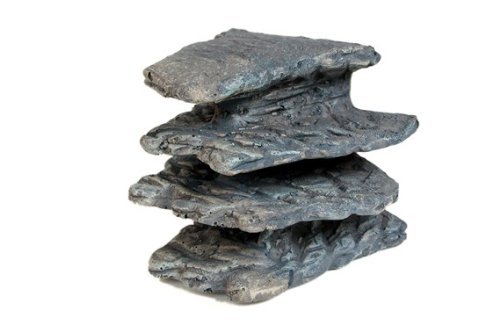
Wiki Menhirs

"In the French comic series Asterix, the main character's Asterix sidekick is Obelix, a menhir smith and "delivery man". His handling of menhirs is easy thanks to his superhuman strength. Although menhirs are featured prominently in the series (Obelix is frequently seen carrying one on his back, occasionally hurling them; he even offers one as a gift), their purpose and significance is never taken into consideration. In the issue Obelix and Co., the Romans devise a scheme to introduce a menhir industry and market, although it is also made clear that menhirs actually don't serve any particular purpose, and Roman citizens are soon overwhelmed. (At one point, the Druid wizard Getafix admits to Asterix that even they, the Gauls, are not sure what menhirs are for.)"

from

http://en.wikipedia.org/wiki/Menhir

Tumour

I was going through some writing and found this which is a scene from a story that has now been cannibalised into something different. I thought I'd put it here so the original isn't lost for ever.

--

Dell’s last tutorial of the day at this windy, nasty little art department of the ex-polytechnic in N.. It doesn't look good. She’s wearing a green polo shirt which apparently is the uniform of the Polish restaurant where she works. She has a big nose like a hawk or a French person and she doesn't have any artwork in her studio. Though Dell notices that she does have nice eyes that look hazed and drugged, and full lips, which she teases with her teeth. And then also she has looked at Dell’s website and brings him a photo of her bedroom which she says reminds her of his work. She has a slow, low voice and he warms to her because it’s the end of the day and he likes it when people go on his website. She says today she has invented a new type of dumpling. Dell laughs but she is deadly serious and so he feigns interest. Apparently she has invented a Thai sweet chilli Polish dumpling which frankly sounds disgusting to Dell, but in N. Polish food constitutes a major breakthrough in local cultural relations.

Dells ask her to talk about her work and she shows him a Poirot magazine (the type where you buy a magazine + DVD every week and build up your collection of a famous TV series. They are a purgatory for cancelled TV programmes.) and tells him she found it and wants to do something with it. Dell gets all excited because he has a friend in N. who used to dress up as Poirot to go to school from the ages of 7-10yrs and he is a performance artist and although he is currently in L. running away from a drug debt, Dell is certain that he would want to be involved with the student's project as long as she had money for alcohol (later on Dell realises what he has done re:the student’s safety because his friend has a habit of coercing vulnerable young women into letting him commit unspeakable deeds and who is more vulnerable than a second year art student with a big nose and good lips? The next week Dell will actually contact the University and ask the lecturers to keep an eye on her, e.g., follow up any unplanned absences and ask about any suspicious bruising).

Dell is actually enjoying talking to her, and she has a good childhood story about how she killed a rabbit because her grandma had two rabbits, one white, and one white with black spots. Granny is off round the house, cleaning and hoovering and singing old granny songs to herself and having the TV on at an extreme granny-appropriate volume while our little future-art-student child is frolicking with the two aforementioned rabbits. Future-art-student child decides that the black spotted rabbit is dirty and that it needs to look like the white rabbit (racial undertones here, in the student’s story, that also say a lot about N.’s attitude to race/ethnicity, but actually the girl is originally from the South West. But then actually the South West of England isn't exactly diversity central either is it...) and, thinking that she is doing Granny a big favour by saving her some time by finishing up one of the smaller cleaning jobs, she gets a bottle of bleach, pours it all over the black spotted rabbit, and starts massaging the liquid into the fur and skin of the rabbit. The rabbit dies an indescribably painful (and, luckily for the student, unremembered) death, and future-art-student child goes to hospital with chemical burns and scarring + ripping of her vocal chords because of the screaming she did when she realised what she had done i.e., killed the rabbit. These broken chords account for her now low, husky voice, but also, apparently (also unremembered, but confirmed by both Granny and Mum) it meant that for a few months future art-student-child was moving her mouth but no words were coming out, and there were a few weeks where future-art-student child was so wound up and scared and angry that her face was constantly wrapped around a silent, screaming mouth because she was trying so hard to communicate via the broken chords.

Dell and the student laugh about the story, but it is hard for Dell not to keep looking at her hands for permanent scarring and then she starts telling Dell that when she was born, inside her right arm was a huge (apparently about ¾ of the size of her as a [relatively large] newborn baby) tumour. She was born via forceps (or rather, the tumour was born via forceps, and she was pulled out along with it), and taken straight into surgery, to have the thing removed (or perhaps, remove her from the thing), and as they cut into the skin of her arm (which she says, showing Dell her arm, has a scarred indentation from whence the thing came, a sort of gap in the muscle that she allows Dell to really push his finger into and wiggle around and she sort of laughs and sighs when he does this, which, frankly, is both arousing and disturbing for Dell and it’s hard for him to work out which feeling is which), the thing birthed itself out of her arm, and exposed itself to be:

1. Almost perfectly, Platonically, spherical.
2. Covered in thick, black, pubic style hair.
3. Containing moving eye + sets of teeth arranged in jaw-like formations (but not moving or gnashing), embedded within its hairy surface.
4. Pulsing, with blood + a seemingly self-contained vascular system, but no heart.

All this she tells Dell while his finger is inside her right arm and he is wiggling the finger more and she is sighing and laughing and letting out the occasional groan as she speaks and then Dell is sort of getting hard but then he hears another student coming around the corner. He leaps back in his seat, realising that this is not the way to end a day of teaching. And then when the tutorial finishes and he subtly suggests that he and the student go for a drink or something she looks at him like he is totally insane.

Euphoria, History, Tragedy, Farce: A reduced history of stupid dance music

There's a theory that at the start of any new genre of dance music there are a lot of female vocals in the music because:


1) Female vocals signify female friendliness. This attracts a mixed crowd, which makes the nights more fun because people can get off with each other which is what dance music is (mainly) about.

2) Female vocals signify euphoria. Obviously different vocalists can do different things, but the general rule is that at the start of the creation of a new genre, a female vocal will be all warbly held notes and eye-rolling transcendence.


Then I the scene develops in different ways, some more serious and progressive, some dumber and more populist. I guess I'm calling this 'History' as this is when a scene will be most recognised as culturally meaningful. It will influence pop music, and possibly have crossover hits.


Then, history repeats itself.


First as tragedy. the music is mournful, or regretful, or angry (see: loads of angry jungle and drum and bass, The Eternal Sadness of the Post-Dubstep Scene, mournful house, the-bit-in-garage-before-people-properly-started-doing-grime). It knows that the real history of the scene is over, and it can only mourn. Imagine what sort of music you'd hear at a drum and bass rave in the late 90s. You're stoned and on loads of smacky pills while everyone else is listening to uk garage and drinking champagne and having loads of sex. Tragic.


And then as farce. Which I guess is when a scene jumps the shark and becomes sort of unintentionally hilarious to everyone who doesn't listen to it. (see: brostep for dubstep, the end of drum and bass for jungle, happy hardcore for all of dance music ever [though, actually, if you ever watched the weird videos you got with drum and bass tape packs, it always looked like everyone was going to the happy hardcore room and having the best time ever], lots of types of scally-house, donk etc., for techno and house). This happens when the music has already been completely abstracted from its scene: geographical and ideological. Perhaps the drugs aren't any good either. Or non-drug takers are listening to it.


--


I was thinking about those bits of dance music where it acts out of character. Where dance music reflects on its history as that history progresses. It is most obvious when it is humorous, because dance music isn't normally humorous on purpose, but normally just at the end of that progression from euphoria to farce. And even then it doesn't know its funny. In fact, Skrillex's dedication to music, and the seriousness with which he makes it, is heartbreakingly funny (see: Skrillex posting his favourite song of all time [Aphex Twin's beautiful Flim] and his fans' reactions to it).


I was reading Stewart Lee's book How I Escaped My Certain Fate and he writes about the possibility of a comedy without language (he's quoting someone else, maybe Malcom Hardee), just noises and movements that invoke humour. That got me thinking about all the songs from my misspent youth as a drum and bass listening teenager that were funny somehow.


Sometimes there might be a very conscious attempt at humour - a sample from a film, or a maybe a re-mixed theme tune, and obviously a few novelty raps don't go amiss, but some tracks were just funny via the sound or the feeling of the record. Here's a short selection of songs I remember and songs other people have recommended.


Ray Keith - Chopper Tune. Probably the king of stupid drum and bass tunes. It has a sample of a helicopter, an air hostess saying 'We're now ready for take off' and a portamento bass line.


Andy C - Bodyrock. A swing time drum and bass tune. I hated this when it came out and still do. It started a whole trend of swung drum and bass and it was awful. But it was an unexpected direction for a scene that was, by that time, populated by very predictable music.


Aphrodite - Superman. Pretty obvious really, but really triumphant and stupid. Imagine coming up on pills to this.


Oxide and Neutrino - Bound 4 Da Reload. It has a sample from Lock, Stock and Two Smoking Barrels and  the music is based around the theme from the TV show Casualty. I remember watching it on Top of the Pops and being totally horrified but now I'm quite a fan of this as a late-garage/pre-grime classic with a really nice sense of geography. If your song samples prime time UK medical drama, you probably aren't looking to break America or whatever.


Donae'O - My Philosophy (Bounce). I'm kind of obsessed with this song. I found it while buying some classic UK garage and I kept playing it over and over. It has weird comedy-moral lyrics ('Don't do guns, don't do drugs, just have sex... Protected!'), its bassline is massive but also sounds really stupid. And it has someone pretending to be a frog saying 'Widdit' in the background.


Funky Dee - Are You Gonna Bang Doe. A funky/grime tune with lyrics which do that thing that grime lyrics do where every line ends with the same thing. In this case it's 'Are you gonna bang though?'. Funky Dee is kind of taking the piss out of it (when I first heard grime I just thought the MCs had got confused about what rhyming was), but he's also testing its limits in the safe environment of the comedy song. It has the same weird sample all the way through and he just messes about over the top. Obviously meant for a holiday crowd in napa who will just shout along and then definitely bang, though.


Whistle - Just Buggin. A quick detour into hip-hop, I actually wanted the Spoonie Gee version of this song, which has the same mad keyboard sample, but also has a comedy narrative rap about a girl who smokes too much weed. That is kind of a genre of its own: comedy-narrative rap w/ humorous music.


D.A.V.E the Drummer & Chris Liberator - One Night in Hackney. This is sort of like a farcical techno version of the hip-hop comedy narrative where someone talks about a really good/really bad night out in Hackney. It sounds stupid now, but when I was a bit younger this song made me feel really scared about raves and drugs. There's a brilliant bit at 4:26 where he improvises the line '15 cans of Stella' and then everyone in the recording booth laughs and then they all chant '15 Cans of Stella'. Also, I've only just realised that the title is a joke on One Night in Heaven.


Robbie T - Mrs. Jones 4x4 mix. This is a very popular remix idea, where the actual song plays for a bit (normally a "classic" bit of soul or pop) and then the remix drops in and everyone listening to it sort of has to acknowledge it as a bit clever and silly and fun. These are also the most annoying songs in the world if you don't like them, because while they are popular they are guaranteed to be played at every night you go to.


Hudson Mohawke - Thunder Bay. Someone suggested another Hudson Mohawke tune but a lot of this music is sort of funny and Thunder Bay is just so brilliant and up front and stupid. It sounds like a theme tune to the best Saturday night program ever.


EPROM - Regis Chillbin (Machinedrum Remix). Amazing suggestion of a recent piece of music. Its serious funny, if that makes sense. It's a very heavy, well produced tune, but with loads of dog barks doing the melody. And then at the end the dog barks turn into a baby crying.


Any suggestions?

--

Ok, here are some more from people. I'll update this every now and again...


Jamie Jones - 911. The normally dry world of minimal/tech house is livened up with a pretty lol 911 call. Apparently the call was actually made by a policeman who subsequently lost his job.


Marc Houle - Techno Vocals. Self referential techno record: "why are all the vocals pitched down so low, this is the way we make techno." Actually a really good tune as well as being absurd.


Mr. Oizo - Flatbeat. Someone suggested "Anything by Mr. Oizo", so I picked the famous one. But it's a good point, all his songs are pretty tongue in cheek, as was a lot of French of the 2000s. All the Ed Banger records stuff was knowingly dumb - an invitation to unpretentious fun.

--

Menhirs


Menhirs, triptych of altered digital images, 2013

Compromised Materials

I just moved into some new studios in New Cross, and once I've done this performance on March 15th in Cardiff, I'm going to be making some humiliated/shamed objects. I thought I'd compile a list of materials that I might use for shaming objects.

-Cling film
-Hair (pubic, facial, armpit)
-Playdoh
-Condoms
-Blu Tac
-Spices (pre-mixed ones - Curry Powders, stew seasonings, Jerk seasonings)
-Low resolution inkjet prints of: pop up ads, pornography, camera phone photos, google image search results
-Nails (toe, finger)
-Accumulated matter: belly button fluff, pocket lint, used tissues
-Cigarette ash
-Coffee grounds
-Empty cans of lager. The smell of them.
-Dirt - like, city dirt, not mud. Just stuff from the floor.
-Something about A4 paper, maybe thin, cheap recycled - that off-dirt-white colour. Or Pukka Pads, something about lined paper with those bits from where you rip it off the spiral bound, even though it has that "tear along" line, it never works.
-Toilet roll, though I'm aware of making the shaming too obvious - sexual, faecal, etc.
-Party poppers (those bits that fly out, mixed with wet lager)
-Poppers (as in Liquid Gold etc.)
-Rolling tobacco, again, wetness and smell is important here
-Used tape: packing tape (brown), sellotape (dirty/clear)
-Bubble wrap/wrapping/tin foil?
-Plastic drinking straws - I had these nasty, soft-neon colours
-Used cleaning materials (sponges, j cloths, brushes/broomheads/mops)

Ambient Notes #5 (Goldsmiths)

-I'm really late. Feel like I'm in the wrong lecture. One of the Goldsmiths professors is talking about the London riots.

-I can't see a free entry point into the rows of seating so I ask some people to get up and I squeeze past. They do an "annoyed laugh" and in my head I'm like 'well that's unfair', but then when I sit down and look around I see that there are loads of free rows of seats.

-On the projector screen: Riot porn image of the carpet store that got burned down in Croydon.

-Professor says, 'Here's an image from Brixton.'

-A student uses an iPhone to take a picture of text on the screen.

-Instead of looking at latecomers with a superior and condescending smile, I'm now looking each of them in the eye, and subtly nodding as if to say, 'it's ok. It's ok.'

-I feel a bit disconnected to what is happening. Maybe it's being late, or drinking five cups of coffee. Or maybe it's that I was expecting a visiting lecturer rather than a member of the Goldsmiths staff. Or, maybe, last week's hi-tech luxury-lecture at UCL has made me acutely aware of the relative squalor of the Goldsmiths auditorium. Like flying first class, and then flying Ryanair.

-Professor struggles with the volume slider on a internet video. Students laugh.

-Professor says 'That was Mike Kelly. When he was alive.' Students laugh.

-Soft, small wedges of feedback from the two mics positioned in front of the Professor.

-"Anti-social private acts"

-Through being property, art is limited in its political reach.

-Not sure if both mics are turned on, but the Professor's voice is distorted.

-Professor asks if the students have seen the work of a particular artist. Students respond reluctantly and quietly.
  +The artist is a sculptor, community organiser, blues musician and a fireman.

-Professor tells us she is going to read some Marx, 'I'm very sorry.'

-Another Professor is charging her iPhone from the sockets on stage. She sits in the front row, with the white cord trailing across the desk.

-"Property is theft" is a phrase coined by the anarchist  Pierre-Joseph Proudhon, often wrongly attributed to Marx.

-Left-wing politics at this level, talking about art and revolution and "The Riots" makes me really tired. I need to burrow underneath it.
  +With Marx, the proposed inevitability of the (self)destruction of capitalism makes him tiring to read. Capital's success as a book would be judged on how unread it was, i.e., when the inevitable revolution occurred it would necessarily be irrelevant. To read Marx is to confirm the present domination of capitalist ideology.

-Professor says 'the creation of and the destruction of the idea of'.

-Social Necessity vs Valuable Asset.

-Just remembered I have a banana in my bag but feel like I can't be late and also eat fruit in the lecture. I'm not even a student here.

-A student uses an iPad to take a picture of text on screen.

-On screen: Andrea Fraser "How can we rationalise our participation in this economy?"
  +The idea that art objects' primary meaning can be found in the web of their economic relations.

-Could objects be comrades not commodities?

-Could objects be enemies?

-Objects can be capitalist, for sure, but could they be socialist, or communist? If capitalism is a void of ideology perhaps objects are necessarily capitalist, if they too are a void of ideology.

-"Convulsions of Empire."

-Sometimes I want to be really well off. Not like, boats and furs and private islands well off. But maybe a three story house in north or east London well off. Turn the heating on when I'm cold well off. Own and not worry about the cost of owning a dog well off. Parents have a second car that I borrow well off. Have been skiing in my life well off. Pay for a full time MA well off. Buy new jeans instead of having to wear black underwear and hoping nobody notices the holes well off.

-Professor says 'I'm going to end on a boring note.'

-I also wish, sometimes, in lectures about Marxist theory, that I was well off enough to be ignorant of how well off I was. Well off enough to feel classless.

-Flat Ontology is enforced (false?) equality. Does it assume an impossible dream, namely that we might be able to think non-anthropocentrically? Is this impossible not just philosophically, but psychologically? Is every denial of correlationism an affirmation of correlationism?

--

-Writing/note taking surfaces in the auditorium, in order of quantity: Black bound, lined notebooks - various sizes, black bound, sketch books - various sizes, black bound grid squared notebooks - mainly A5, A4 spiral bound lined pads (the "economic" choice, reminds me of sixth form college), Macbook Pros, brightly coloured or patterned "gift" notebooks, mostly impractical - too small and/or too thick, the margins of print outs of today's reading, the margins of the other, less relevant print outs, folded bits of miscellaneous, grubby paper, a napkin, the back of a wrist.

--

Q & A

-On screen: screensaver of Microsoft Windows XP Professional logo.

-The Professor and the Other Professor share a single, clip microphone that they pass between them.

-The mundane nature of meaningful political/social action.

-Feedback comes in right-angled, triangular waves, rising to a peak, and then cutting to silence.

-The revolution isn't coming. The working class know that. Why don't we know that? The people who would benefit from the revolution know it isn't coming. The rich think it's coming, and are trying to stop it. The (academic) middle class spend their time theorising the conditions for the possibility of it, whilst our very existence depends on it never happening.

-Can you give up on the possibility of meaningful political change and still have meaningful political thought?

-Maybe if I was well off I could begin to tame objects through ownership.

-Student in front of me has taken his notes in pencil. Seems insane. How has he managed to keep the line so consistent?

-I'm so bored of talking about the riots. I'm also hungry.

-Older student humblebrags about their age (i.e., implies that they have wisdom, experience that young people won't understand).

-Student in front of me is distractedly moving the cursor around on the screen of his Macbook Pro, re-sizing windows and highlighting random lines of text.

-The Professor's computer has gone to sleep and the projector screen suddenly turns a deep, International Klein Blue.

-The "No Signal" icon has appeared on screen, along with a five minute countdown timer to when the projector will automatically switch off. Feel like when I die that might be what I see.

-I guess we are all bit guilty. Why are the humanities so guilty? Art, philosophy, literature. What makes us guilty? Science, capitalism? Does the crisis come from within or without?

-The tang of the real, the smell of it. It's a rotten smell that you cannot locate. A decomposing rat in the space between the walls. 'What's that smell?', asks the visitor. 'Oh that?, we're used to it. It's just the real', we say. The visitor wrinkles their nose and stays for coffee but doesn't eat a biscuit and leaves quickly after.

-It stinks, the real. It is honking. Cheesy. A deep, rich scent.

-What is thought? Bleach, to clean the smell away? No. Febreze, to neutralise and eliminate the stubborn odour? No. Pot pourri, to mingle with the stench of the real, give it a sick depth, a horrifying richness? Yes, thought is pot pourri. Cheap and nasty and making it worse.

-Professor says 'I hate to fetishize craft'.

-Art is in a mannerist phase. Painters know this. When it is not mannerist, it moves outside the scope of art.

-Professor openly worries that her arguments are accidentally in support of "The Big Society".

-Student asks a question about boredom, administration as a site for revolution, and the danger of 'exciting administration'.

-The countdown finishes. The projector turns off. The screen goes black.

Humiliating the Objects


Objects are more real than us; stronger than us. Here is a rock mound in a Welsh town. It sits there, and the town has to deal with it.

That's what objects would say if they spoke. 'Deal with it.' But obviously they don't say that. They don't say anything. They're silent. And their silence is a part of their strength.


This is how we get our own back on the world, on objects. We soil the world, we humiliate the objects. We bring them down to our level. Unstable, unsure, unnecessary.

We drop all of our shopping out of our Tesco bag and we just leave it there, on the floor. Our unbagged broccoli, our pre-washed salad, our Ripe and Ready avocados.

Or, on a larger, more collective scale, the detritus of our actions washes up on a beach. Brought together by longshore drift. Our jerrry cans, our mop buckets, our condoms.


Maybe if I want to make inadequate objects then I could take my cue from the everyday humiliations we inflict on objects.

Here's a discarded Christmas tree (isn't the name humiliating, a tree defined in terms of a human festival), wrapped in a bin bag and thrown onto the street.


Wrapped objects. Bagged objects. Objects whose skin is deemed too weak for the attentions of other objects. Objects that need protection from the elements.

Rose bushes wrapped for the winter, to protect them from the frosts.

A bronze statue wrapped in tarp, awaiting repair.


Gagged objects. Bound objects. Objects whose sole function is removed. Objects whose abilitities are constrained.

Slippers placed on fence posts, unable to walk.

A postbox wrapped in hazard tape, unable to accept letters.


Shamed objects. Ridiculed objects. Objects that are made dirty by our spillages. Objects that are misused, brought into contact with other, lesser objects.

A trainer covered in cinnamon, aromatic and dusty.

A towel used for drying tomatoes, trapped underneath the organic matter.


Ambient Notes #4 (Graham Harman at UCL)

This lecture was given by Graham Harman, an Object-Oriented philosopher, to architecture students at UCL. It was called Objects in Art and Architecture.

The notes are in three sections. First Graham Harman's introduction to Object Oriented Ontology. Then his links to architectural theory (or, how Object-Oriented Ontology [OOO] 'brushes up against architecture' as he put it). Then the Q&A.

--

-On the desk in front of every auditorium seat there is a numeric keypad with "Turing Technologies Response Card RF" on it. I have only vague ideas about what it might be used for but its presence suggests that UCL is a very wealthy university.

-The auditorium is hot. Properly hot.

-Graham Harman (GH) has been fitted with a good quality, well positioned microphone. Someone's job is to position that microphone.

-Objects and Relations.

-Philosophy is not a master discipline.

-Objects cannot be reduced to what they're made of, or how they appear.

-GH has coined the term "overmining". I would suggest that neologisms are how you know you are a proper philosopher.

-(Scientism: What if everything was made of tiny Graham Harmans?)

-GH is dwarfed by: The projector screen, the multiple whiteboards, a huge periodic table up on the wall (we're in the chemistry building), the sound of his own voice (which can be heard in multiple: 1stly - in full tonal depth emitting from the four high quality speakers positioned evenly around the auditorium, 2ndly - a split second later, tinny and distant, emitting from his mouth.

-Humans are gullible, are objects gullible?

-You cannot define a thing simply by the effect it is having on other things right now.

-Tristan Garcia - up and coming French philosopher, first book about to be translated.

-Philosophy is dominated by two forms of reduction (under and overmining - reduction to 'real' distinct particles, or reduction to single homogeneous mass).

-Bruno Latour - Actor Network Theory -> He invokes "plasma" as the stuff between networks that allows change to happen - a sort of ether!

-Non-reductive ontologies:
+Aristotle - primary substances (though it has artificial, imposed limits on what those are)
+Phenomenology - Husserl, despite Idealism, writes about objects of consciousness, and Heidegger, objects are real but withdrawn.
+Whitehead/Latour, entities/actors. No transcendence or reducability, everything is an entity/actor.

-Even the bin in the auditorium is massive. It's bright yellow too, the brightest thing in the room.

-Critique of OOO: a poetic of objects. Response: philosophy is not a search for knowledge but a love of knowledge (he comes back to this later in the Qs and explains that he doesn't mean some lyrical, blurry idea of philosophy as love of knowledge, but that philosophy must use metaphor to aim at deeper knowledge - e.g., ontology is a study of being not beings).

-Everyone's clothes are very dull. Architects dress very conservatively.

-Zizek, Badiou, Meillassoux: All indebted to Heidegger, but never assimilate his philosophy.

-Hegel: you can't interact with the thing in-itself outside of your interaction with it.

-Heidegger: Hegel's phenomenology is a reduction to "presence".

-Some objects are not present until the malfunction, e.g. if this chair broke now, it would be the first time I noticed it. Not phenomena, just a tool. Objects that we don't conceive of even as we use them.

-The chair is not reducible to my use of it. Withdrawl, objects are dark.

-"Fire burns cotton" is a commonly used example in Islamic philosophy - a bit like like billiard balls in western philosophy.

-A student in here is so well off that she is successfully unironically wearing a Burberry print scarf.

-Meillassoux - After Finitude: GH thinks that finitude is still valid. Objects cannot be exhausted, in practical or any other terms. As in, there is no way of totally knowing an object, but GH thinks this should be expanded to include object to object relations, not just human subject to object relations.
+Is there a psychological dimension to this? Is it more that only "subjects", (or human objects or whatever we call our/my experience of being in the world) are bothered by not being able to completely comprehend an object? Our not knowing the world is a source of anguish for us, possibly the source of anguish for us.

-Husserl: Objects are unified in experience (and in the world).

-GH's 4 categories - Real Objects, Real Qualities, Sensual Objects, Sensual Qualities.
OOO tries to work out the interactions between these categories.

-Fourfold structures are common in history of philosophy: Four elements, Plato's divided line, Aristotle'sfour causes.

-The walls of the auditorium are thickly coated with heavily textured rendering.

-The girl in front of me smells very much like a girl I was seeing over summer of 2012. We would walk around London, drink lager in terrible pubs, eat McDonalds and then go back to her flat and fuck. Then usually we'd have a massive argument and I'd leave and get the bus home in the middle of the night.

-Meillassoux: Contingency is chaos <-- I've been working with this for ages but thought it was a (purposeful) misreading of After Finitude. Maybe re-buy the book...

--

-Networks and Fields vs Architectural Objects.

-Perception: in architectural theory, OOO is a reaction to the success of relational theories.

-Communications: Flat Ontology and Relational Ontology. Patrick Schumacher's theory or architecture as communication

- Attempts at Flat Ontology almost always have exceptions, e.g., contradictory/imaginary objects. The problem with making exceptions is that you then tend to privilege relational objects, which creeps towards privileging humans.

-Space is a site of relation and no-relation - a site of potential for partial relation. (I thought objects had space-time, objects are prior or creators of space-time [via Einstein and shit]).

-(What I thought was a German student starts asking a very long non-question about the status of philosophy. I later found out that this was Patrick Schumacher, who GH had referenced directly in his lecture.)

-Basically, at this point, Scumacher uses philosophy, or relies on it to write and think, but he doesn't like it. The question is going on for ages. He hasn't even made the pretence of going up at the end of a non-question sentence to make it sound questiony. Makes an interesting point about art, philosophy and maths being 'free floating disciplines.'

-He has been talking for seven minutes. Claims that philosophyis an 'agent provocateur'.Claims he is in the 'real world' (not making this up, after a whole hour long lecture about reality and the problems we face describing it). He means market reality: 'big projects', clients, money, buildings. He finds a universal ontology problematic (duh).

-Looking to my right, the side of the auditorium where the big yellow bin resides, I see a student with a jumper and another student with a notebook in the same shade of yellow as the bin.

-The professor who introduced GH is telling Patrick Schumacher to stop talking.

-Patrick turns around to acknowledge the professor with a frightening, masochistic face and says 'I was just finishing off'.

-GH keeps his cool. Total pro, very coherent responses to the Qs that he has picked out from the long rant.

-Ahh, shame, he lost his mojo because he accidentally knocked the desk lamp with his hand.

-Heidegger's tool theory points towards objects being in the world, even as he insists on their unknowability.

-Change might not occur within objects, but through symbiosis with another object.

-A student asks a question about tool theory and then has to say tool about seven times. Three times he says something like 'I consider myself a tool'.

-GH uses the term "object" because he comes from a phenomenological tradition where that term has specific meaning. "Object" as a term has different resonances in different traditions.

-The professor who introduced GH is super hot.

-A student asks about post-human feminism. I feel a bit guilty for finding the (female) professor hot. For the record, GH is an average looking man in his mid 40s, not particularly attractive/unattractive.

-GH describes a post-human feminist philosopher as 'Fesity'.

-Approaching an object on its own terms.

-Student in front of me is fingering an apple, turning it over and over in his hands. Touching and rubbing it.

-People have started coughing, not one person with a recurrent cough, but the audience in general.

-GH: real = not replaceable by a description.

-Scientistic philosophers have a problem because they have to posit a level at which reality exists.

-The Bourgeois, Neo-Liberal subject "making decisions".

-Joke about Aristotle: he was a great philosopher of mid-sized, everyday objects.

-GH thinks that all objects might be mid-sized in a non anthropocentric ontology.

-Q: the birth of an object

-The idea of an object can be false. (Thought: could this be reversed into a description or technique of the creative act: Could art begin as a "False Object"?)

-Patrick Schumacher jumped in again.

-OOO doesn't promise criteria  for what an object might be, or what might be real or not real.

-Patrick Schumacher goes on and on with no reason as to why he might be talking ,like an English person talking about American politics.

-Q: Objects and discreteness.

-You cannot only have continuum if there are to be real objects.

-GH thinks there is discreteness in real objects, and individual continuums (discrete continuums?) in sensual objects.

-Lacan's "real" is only their as a traumatic event for humans.

-The lecture theatre is colder now.

-My mouth tastes bad and I need a shit. I wonder if they're related sensations?

-The guy who was fingering his apple has eaten around the whole rough sphere of the apple, carefully removing all of the skin before replacing it back on the desk in front of him.

-The girl next to him is drinking German rhubarb water.

-An infinite regress of objects (ahh, ok - because to have a prime mover, first cause ultimate reality would be a metaphysics).

-Islamic Occasionalists: God should cause all things, or causality is through God.

-GH: Speculative Realism privileges maths as having access to reality.

-Patrick Schumacher gets the last Q, is asked to keep it short. People start talking, people get up to leave. Patrick Schumacher does not hear the people talking, he does not see the people leave.

-Apple guy puts on a snood.

The Irony of Objects (first try)

1 Language is always ironic.
  1.1 Language always refers to something outside of itself.
  1.2 This referent is a different thing to the word.

-Apologies for the numbered, bullet pointed, Wittgenstein (via Tolstoy) style listing. It felt like the easiest way to do it.
-My keyboard's space bar is partially broken, if I don't push down hard enough I get huge run-on words with no gaps as though I were making a compundGermannoun.
-In the coffee shop (a new franchise in the town where my parents live. Bad coffee, good cakes, staff who are happy to have a job), I explained all this, and she said, 'Maybe that's why language is ironic, because objects are.' and that is a better explanation than everything else you'll read here.

2 Language is essentially ironic.
  2.1 Its essence is to have no meaning in itself.
    2.1.1  Or, its in itself meaning is veiled behind its referential meaning, which exists outside of language, in the things it refers to.
      2.1.2 Also, it does not mean anything to itself. Its referential meaning, that which we (as its users) regard as it's real or functional meaning is lost to the words themselves. They do not experience themselves as ironic.

-But writing this stuff down is hard, I feel fuzzy today. When do I not feel fuzzy? Apparently mathematicians peak in their late twenties. I'm not a mathematician, but I'm in my late twenties! Am I peaking? Is this what peaking feels like?
-That's why I am writing in these stupid bullet points, like I can somehow enforce order on my thoughts.
-My thoughts, which move faster than I can write, thoughts which move faster than I can put them together, thoughts which move faster than I can think.
-Thoughts which by their nature don't let me me think, are muddled between thoughts and thoughts about those thoughts; thoughts about things here and things away from here; things real and unreal; things concrete and infinite.

3 Language is hidden from itself
  3.1 To talk about language's meaning is to already assume that language has meaning.
  3.2 Language doesn't have the tools to analyse itself.
  (3.3 In fact, everyday language often doesn't have the tools to analyse lots of things.
    3.1.1 Which is why technical languages spring up where everyday language fails.
      3.1.2 We could say here that when everyday language fails, it falls back and becomes only itself, its meaning fails to refer to the thing we wish to describe.)

-I told you it was easier if we just left it with what she said in the overpriced coffee shop in the town where my parents live.
-All I really wanted to write is that I have been thinking about how language is always ironic, and how Object Oriented Ontology talks about objects as being removed from one other, and their essential characteristic as being more than the characteristics that can be experienced by other objects, and then I said this to her and she said, 'Maybe that's why language is ironic, because objects are.'


An Ontic Appreciation


I'm going to be doing a project with Emma Cummins about the "Ghost Estates"of Ireland. Emma asked me if I'd like to be involved in writing a two handed publication: an essay by her, and an essay by me. It will be published as an e-book. Though actually, as it's a new series, and it hasn't been launched on their website, I better not mention who's publishing it.


--

I'm trying to think of a different way to approach the subject. Urban development, politics, and the fallout from the recession were topics that I came back to again and again in 2012. I guess I've been writing seriously about this stuff since 2010, with my residency at The Royal Standard.

Actually, the "Ghost Estates" (I'm putting that in quotation marks because Emma and I aren't really happy with the term) are in rural areas, and most of my writing has been about cities, but the underlying social and political narratives are the same. Or rather, they could be the same if I allowed myself to focus on them.

Emma's essay will be a thorough critique of the failings of planning and finance at a local and government level through an exploration of what she has termed Pathological Geographies. Emma knows her shit, and she has been thinking about this stuff for a long time.

The fact that she'll be taking on the social and political aspects of the situation frees me up a little. We can do the same physical research - visiting these barely populated, often unfinished housing estates - but I can focus on other things, take a different angle.


--

I've been reading bits of Speculative Realism and Object-Oriented Ontology (OOO [how cool is OOO for an acronym?]) for a few years, but only recently has it come to feel practically applicable. It suddenly feels very relevant to how I write and make artwork. In the essay I'm not going to foreground the technical philosophy of this stuff, because the publication is meant to be accessible to non-specialists. Its influence on the text will be more like a shift of perspective, or emphasis.

I'm going to take elements of OOO and use them as inspiration for literary techniques that allow me to read the architecture of the "Ghost Estates" as objects, rather than signifiers of human-to-human relations. My essay will be worked from the outside-in. I will begin with the sheer, objecthood of the "Ghost Estates" as my starting point. My first question will no longer be 'What can I see?', but 'What is there?'. I want to make the switch from epistemology to ontology: from a study of what we can know, to a study of what is.


--

This is not to say that my writing is going to become more empirical. Philosophy doesn't help you access the physical world in a more direct way. It's more like a shift in the way I approach the subject. By the end of last year I felt pretty drained by walking around cities and talking about the recession. The same conversations about the failings of the political and financial system could be had in whatever city/country you happened to be in.

If before the crash of 2008 we suffered a delusion that we had learnt enough from previous recessions to stop the boom-bust cycle, we are currently in the process of imagining ourselves into a new, but similar position of knowledge: that somehow, now, we must be in possession of "the facts" because we failed to prevent the boom-bust cycle.

I'm just starting again, from what is there, which are the ruins, these architectures without function. I'm working from a basic assumption that I won't know anything about these estates until I get there. What I hope to do is strip away what I would normally bring to a text, and instead focus on an ontic appreciation of the "Ghost Estates".


--

Ambient Notes (Goldsmiths #3)

This lecture was given by Eileen Simpson and Ben White of the Open Music Archive.

-Arrive in the room, electronic music is playing, it sounds like mics gently feeding back.

-Lecturers are multiple (2), young.

-"Flashy" opening AV introduction w/ fast paced images + spoken word.

-Feedback on both mics, feels like the lecturers know this and are making "the best of a bad job"

-Lecturer cringes as she says 'Problematise'.

-Copyright creates the conditions for open access.

-Lecturer says 'Piped'.

-Lecturer says 'We are surrounded by death'.

-On the screen: 'Who's died in Blues, Jazz'.

-A student types incredibly fast on a Macbook pro 13".

-Lecturer references Derrida. Maybe not as young as I thought.

-It becomes clear that the introductory AV spectacular was necessary to offset the rest of the slideshow, which mainly consists of screen-grabs from websites or digital images of old technology.

-Free 'libre' vs free 'gratis'
  -As in, Free as in freedom vs free as in free beer.

-Lecturer says, 'Cover the cover' 'Plug'

-At the moment it is very fashionable to do live broadcasting in art - but the quality (as in, quality of content and technical quality) is low. When it becomes ubiquitous, artists will stop engaging with it, just at the point where the quality could be higher.

-On the screen: a digital image of a url of a website printed on paper.

-On the screen: a digital image of a DVD.

-On the screen: a digital image of a vinyl record with "CDR" printed on it.

-Lecturer says 'DJs'

-Lecturer's microphone fades down to silence then fades back in again.

-Lecturer says 'Flipped and reversed'

-There's something lovely about redacted manuscripts - as though you can just sigh and say 'oh well, can't read that!'

-On the screen: a digital image of a VHS tape.

-A man in his 40s w/ black beanie hat and the look of a "working man" opens the door, looks in, is startled by what he sees, realises his mistake, and backs away, letting the door swing shut.

-A student has a collection of objects on his desk, covered with a towel.

-The lecturers' use of AV is accomplished. They know how to operate the auditorium lights, they're showing videos and images, and playing sound, all as part of one slide show. Most lecturers (most people, actually) can barely work their laptops.

--

-In the break before the Q&A soft jazz plays, people chat. The vibe is that of a pre-Christmas "get together" at a neighbour's house.

-On the desk beside me, a student has left a pen, a notebook, a glasses case, a pair of glasses and a single mini-egg (purple).

-A student wears headphones and watches the screen of another student's Macbook pro.

-Professor and Lecturers chat. No one is in a hurry to get on with the Q&A.

--

-In front of the Professor there is an empty mid-sized bottle of Copella Pressed Apple Juice.

-Two students who arrived in the break are now sitting a few rows down ignoring the Q&A and talking to each other in a Chinese language.

-Lecturer says 'QR code'.

-Professor says 'What's a QR code?'

-Cliff Richard is a subtly malevolent force for several reasons.
1. His role as a "friendly face" in lobbying the government for the extension of copyright on music.
2. His part in the funding, creation, and upkeep of an abominable piece of public art in Birmingham. And, also, his subsequent retraction of that funding for upkeep, forcing the local council to pay for its removal and storage.
3. His horrifying and skin-crawl-inducing relationship with Tony and Cherie Blair.

-The Chinese students in front of me have huge phones that they have to hold with two hands. It occurs to me that at one point, the assumption was that phones would get smaller and smaller. They haven't.

-Retain control, or, perhaps retain integrity.

-A student has a neatly folded satsuma skin on the desk in front of her.

-Lecturer says 'We're all pirates, to an extent'.

-A student has a "sports" bottle of water but the "sports cap" has broken off. He'll have to throw it away, or perhaps, carry it upright in his hands all the way home.

-The false ceiling of the auditorium is very beautiful in an institutional way. The arrangement of lights, spotlights, speakers, air vents and fire alarms is symmetrical. Near the back of the auditorium some ceiling tiles have been replaced. They have a slightly different colour/texture to their neighbours.

-The sound of a student typing on their keyboard is similar to the sound of someone shaking their wrist whilst wearing multiple plastic bracelets.

-The inter-dependant relationship of the professional and the pirate market.

-Next to the student with the folded satsuma skin sits a student on whose desk is an uneaten satsuma.

-A student's question includes the word 'Schtick'.

More Quotes from Herr C.

In yesterday's post about Heinrich von Kleist's On the Marionette Theatre I didn't get to include my favourite quotes from the essay, especially from the character of Herr C., who I find fascinating. So here they are.

'But viewed in another way, this line is something very mysterious. For it is nothing other than the path to the soul of the dancer, and Herr C. doubted that it could be proven otherwise that through this line the puppeteer placed himself in the center of gravity of the marionette; that is to say, in other words, that the puppeteer danced.'

'The movement of his fingers has a somewhat artificial relationship to those of the attached puppets, somewhat like the relationship of numbers to logarithms or the asymptote to the hyperbola.'

'Affectation appears, as you know, when the soul (vis motrix) locates itself at any point other than the center of gravity of the movement. Because the puppeteer absolutely controls the wire or string, he controls and has power over no other point than this one: therefore all the other limbs are what they should be dead, pure pendulums following the simple law of gravity, an outstanding quality'

'When he dances Paris and stands among the three goddesses and hands the apple to Venus, his soul is located precisely in his elbow, and it is a frightful thing to behold.'

'And Paradise is bolted, with the cherub behind us; we must journey around the world and determine if perhaps at the end somewhere there is an opening to be discovered again.'

'I laughed. Indeed, I thought, the spirit cannot err where it does not exist'

'Without a doubt I would have struck the chest of a man. The bear made a slight movement of his paw and parried the blow.'

'Eye to eye, as if he could see into my very soul, he stood there, his paw raised ready for combat'

'Just as the intersection of two lines from the same side of a point after passing through the infinite suddenly finds itself again on the other side-or as the image from a concave mirror, after having gone off into the infinite, suddenly appears before us again-so grace returns after knowledge has gone through the world of the infinite, in that it appears to best advantage in that human bodily structure that has no consciousness at all-or has infinite consciousness-that is, in the mechanical puppet, or in the God.

Therefore, I replied, somewhat at loose ends, we would have to eat again of the tree of knowledge to fall back again into a state of innocence?

Most certainly, he replied: That is the last chapter of the history of the world.'